







What's Happening?
Farmers in Greene County, Missouri, are being urged by the Missouri Native Grasslands Collaborative to plant more native grasses, moving beyond the prevalent non-native fescue. Mark Green, a local cattle farmer, has dedicated 10.5 acres of his property
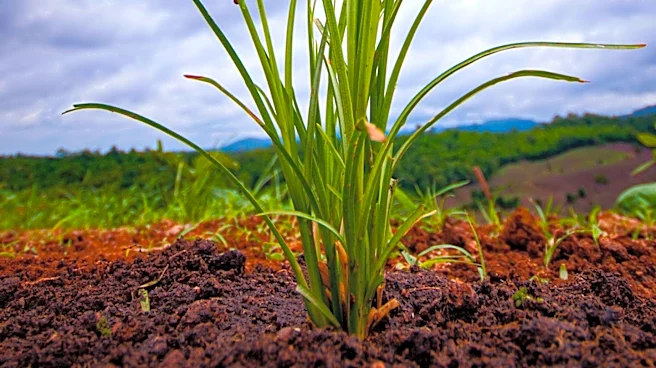
to native grasses, which are thriving after just a year and a half. While fescue has historically been crucial for cattle farming in southwest Missouri, it struggles in hot and dry conditions. Native grasses like Big bluestem and Indiangrass, however, are well-adapted to Missouri's climate, having evolved with droughts and fire on the prairies. Bill White, a coordinator with the Collaborative, emphasizes that these native species, with their deeper root systems, offer significant environmental benefits, including reduced chemical runoff into waterways and improved water retention during heavy rainfall.
Why It's Important?
The push for native grasses in Missouri is important for both ecological restoration and agricultural economics. Ecologically, native grasses improve soil health, prevent erosion, and enhance water quality by reducing runoff of chemicals and nutrients into streams. Their deep root systems make them resilient to drought and heat, which is increasingly vital in the face of changing climate patterns. Economically, integrating native grasses can benefit cattle farmers by providing summer pasture, allowing non-native fescue to rest and recover for better fall and winter grazing. This practice can reduce the need for supplemental hay, thereby cutting operational costs and improving the profitability of livestock operations. It represents a sustainable agricultural practice that aligns economic incentives with environmental stewardship, offering a more resilient farming model for the future.
What's Next?
The Missouri Native Grasslands Collaborative, along with local conservation agents from the Missouri Department of Conservation (MDC) and the USDA, will continue to offer guidance and assistance to farmers interested in planting native grasses. This includes providing information on available programs and resources to facilitate the transition. Farmers like Mark Green will likely serve as examples, demonstrating the practical benefits of native grass integration. The ongoing effort will focus on educating more Missourians about the long-term environmental and economic advantages of native species, aiming to increase adoption across the state. Success in these initiatives could lead to broader policy support for native grassland restoration and sustainable agricultural practices.
Beyond the Headlines
The initiative to plant native grasses in Missouri extends beyond immediate agricultural and environmental benefits, touching upon the broader concept of ecological resilience and the re-evaluation of traditional farming practices. The reliance on non-native fescue, while historically productive, highlights how agricultural decisions can inadvertently create vulnerabilities to environmental stressors. The shift towards native grasses represents a move towards working with, rather than against, natural ecosystems. This approach can foster greater biodiversity, support local wildlife, and create more stable agricultural systems in the long run. It also underscores the importance of collaboration between farmers, conservation organizations, and government agencies in addressing complex environmental challenges and promoting sustainable land management practices that benefit both the economy and the environment.