





What's Happening?
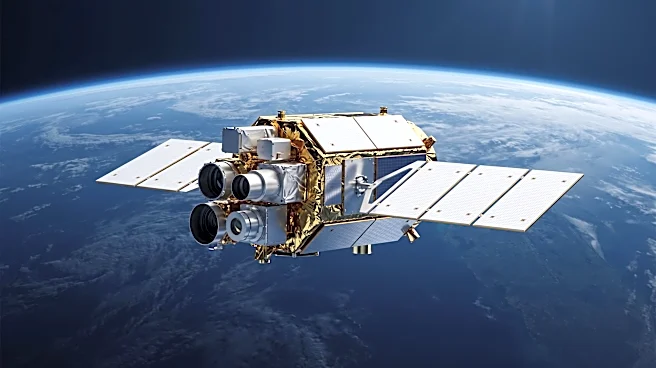
NASA and the U.S. Department of Agriculture (USDA) have formalized an agreement to collaborate on Earth observation (EO) and geospatial analytics. This partnership aims to improve the data available to American farmers, enhancing monitoring capabilities
for crops, droughts, and natural disasters. The Memorandum of Understanding (MoU) was signed by NASA Administrator Jared Isaacman and Secretary of Agriculture Brooke Rollins at the University of Alabama in Tuscaloosa. This initiative is part of NASA's broader effort to foster inter-agency cooperation, following a similar agreement with the Department of Energy on space nuclear power and propulsion. The collaboration will focus on remote sensing science, geospatial data integration, aligning NASA's work with agricultural needs, and improving the monitoring of various agricultural and environmental factors.
Why It's Important?
This collaboration is significant for American agriculture, as it leverages advanced space technology to provide farmers with more precise and timely information. By combining NASA's Earth-observation data and technical expertise with USDA's agricultural knowledge, the initiative can lead to more informed decision-making for farmers and ranchers. This improved data can help optimize crop management, mitigate the impacts of droughts and natural disasters, and enhance overall agricultural productivity and resilience. The partnership also underscores a commitment to innovation and American competitiveness in the agricultural sector, potentially leading to new high-risk, high-reward ideas that benefit both science and the economy. Furthermore, it highlights a trend of government agencies breaking down silos to achieve common goals, demonstrating a more integrated approach to national challenges.
What's Next?
The agreement is expected to deepen the existing partnership between NASA and the USDA, leading to more integrated efforts in remote sensing science and geospatial data. Future steps will likely involve the development and implementation of new tools and systems that utilize space-derived data for agricultural applications. This could include advanced models for predicting crop yields, early warning systems for environmental threats, and more efficient resource management strategies. The success of this partnership could also serve as a model for other inter-agency collaborations, potentially expanding the use of space technology to address a wider range of national challenges. Continued investment in these areas will be crucial to realizing the full potential of this data-sharing initiative.
Beyond the Headlines
Beyond the immediate benefits to agriculture, this partnership has broader implications for the role of space technology in addressing terrestrial challenges. It highlights the increasing recognition that data collected from orbit can provide invaluable insights for various sectors, from environmental management to economic planning. The ethical considerations around data privacy and equitable access to these advanced tools will become increasingly important as such collaborations expand. Moreover, the initiative could inspire future generations to pursue careers in STEM fields, particularly in areas that combine space science with practical applications like agriculture. This interdisciplinary approach could foster a new era of innovation where space exploration directly contributes to improving life on Earth.