





What's Happening?
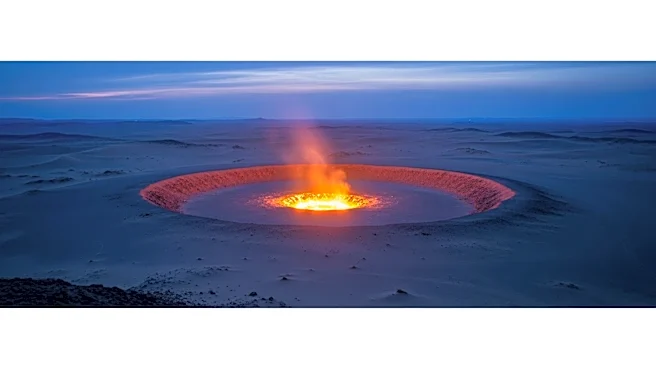
The Darvaza gas crater in Turkmenistan, famously known as the 'Gates to Hell,' is experiencing a significant reduction in its fiery intensity. According to a report by Jenny Gross for the New York Times, new infrared data analyzed by Capterio, a firm
that monitors gas flares, indicates that the heat from the crater has decreased by over 75% in the past three years. The Turkmen government has expressed a desire to extinguish the flames due to environmental and health concerns, attributing the reduction to nearby gas wells drilled in 2024. However, Capterio's data suggests that the decline in intensity began earlier, leaving the exact cause uncertain.
Why It's Important?
The reduction in the intensity of the Darvaza gas crater has broader implications for environmental and energy policies. The crater, a result of a drilling mishap in the 1970s, has been burning for decades, contributing to greenhouse gas emissions. The Turkmen government's efforts to extinguish the flames align with global initiatives to reduce carbon emissions and mitigate climate change. Additionally, the decline in the crater's intensity could impact tourism in the region, as the site has been a popular attraction. The situation highlights the challenges of balancing environmental concerns with economic interests in resource-rich regions.