
What's Happening?
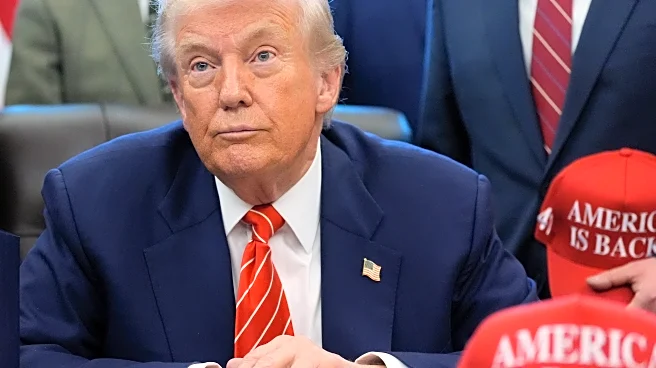
President Trump is actively reshaping the global order by adopting a more unilateral approach to foreign policy, diverging from the traditional U.S. strategy of aligning with international allies. His
administration has taken a firm stance on Greenland, asserting U.S. interests in the territory despite opposition from Denmark, which currently holds sovereignty. Trump's foreign policy has also seen increased military interventions, with recent actions in the Middle East and Africa, and a controversial stance in Venezuela. This shift has led to skepticism among U.S. allies, who are reconsidering their reliance on the United States. Analysts like Ian Bremmer of the Eurasia Group suggest that Trump's approach underestimates the importance of alliances, potentially weakening long-term U.S. influence.
Why It's Important?
The shift in U.S. foreign policy under President Trump could have significant implications for international relations and global stability. By prioritizing unilateral actions and military interventions, the U.S. risks alienating long-standing allies and diminishing its influence in global affairs. This approach may lead to a realignment of international alliances, as countries seek to reduce their dependency on the U.S. and explore alternative partnerships. The potential destabilization of traditional alliances could impact global trade, security, and diplomatic efforts, particularly in regions where U.S. influence has been a stabilizing factor. The long-term effects of this policy shift could redefine the global power structure and the role of the U.S. in international politics.
What's Next?
As President Trump continues to implement his foreign policy agenda, the international community will likely monitor the U.S.'s actions closely. Allies may seek to strengthen their own regional alliances or engage with emerging powers like China and Russia to balance U.S. influence. The administration's focus on the Western Hemisphere, reminiscent of the Monroe Doctrine, suggests a continued emphasis on asserting U.S. dominance in the region. However, the effectiveness of this strategy in achieving long-term peace and stability remains uncertain. Future diplomatic engagements and military actions will be critical in determining the success of Trump's foreign policy and its impact on global dynamics.
Beyond the Headlines
President Trump's foreign policy approach raises ethical and strategic questions about the use of military force and the role of the U.S. as a global leader. The emphasis on unilateral action challenges the post-World War II international order, which was built on cooperation and mutual defense. This shift may prompt a reevaluation of the principles underlying U.S. foreign policy and its commitment to promoting democracy and human rights. Additionally, the focus on military interventions in smaller states highlights the complexities of power dynamics and the potential for unintended consequences in international relations.