






What's Happening?
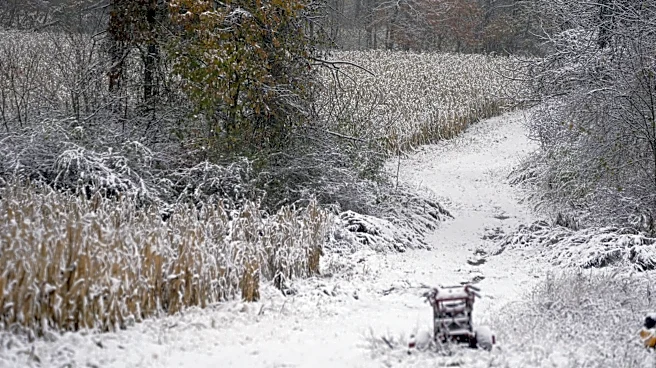
Officials with the National Weather Service have confirmed that snow was spotted in Yancey County, North Carolina. A video provided by Nico Wells captured the snowfall on Mt. Mitchell. The National Weather Service reported that the snow began to fall on the mountain,
which stands at an elevation of 6,684 feet, on Saturday morning. This event follows a period of steadily cooling weather across the Carolinas. Residents and weather enthusiasts can continue to monitor weather conditions in the southeast through available tracking resources. This early season snowfall marks a notable weather event for the region.
Why It's Important?
The reported snowfall on Mt. Mitchell is significant as it indicates the onset of colder weather patterns in the southeastern United States, particularly in higher elevations. For local communities and visitors in Yancey County and surrounding areas, this could signal the beginning of the winter season, impacting outdoor activities, tourism, and potentially local infrastructure. The event also provides valuable data for meteorologists tracking regional climate trends and seasonal shifts. Early snowfalls can influence water resources, local ecosystems, and agricultural planning, making it a key indicator for various sectors in North Carolina.
What's Next?
Following this initial snowfall, residents and authorities in Yancey County and other mountainous regions of North Carolina will likely monitor weather forecasts closely for further cold fronts and potential winter weather. Local transportation departments may begin preparations for winter road conditions, especially at higher altitudes. For outdoor enthusiasts, this could mean the early opening of winter sports opportunities, while others might need to prepare for colder temperatures. The National Weather Service will continue to provide updates on weather patterns, advising the public on any significant changes or hazards.
Beyond the Headlines
The early snowfall on Mt. Mitchell, while a natural occurrence, highlights broader discussions around climate variability and seasonal weather shifts. Such events can spark conversations about the changing timing and intensity of winter weather, which has implications for long-term environmental planning and resource management. For the tourism industry in western North Carolina, early snow can be a boon, attracting visitors for winter recreation. However, it also underscores the need for preparedness for potentially unpredictable weather events, influencing local economies and community resilience in the face of changing climatic conditions.