

What's Happening?
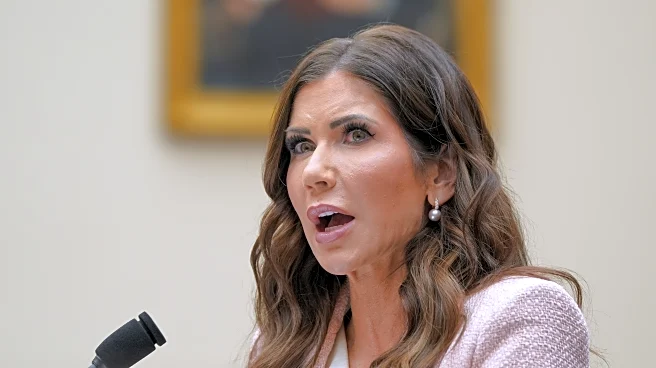
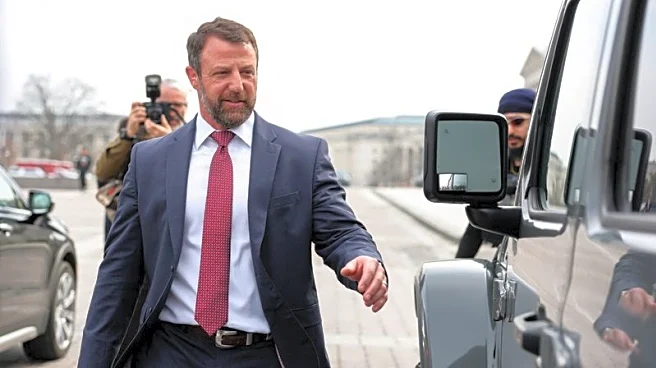
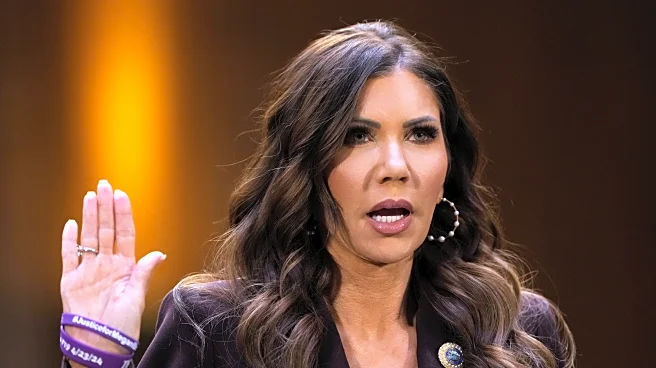
President Trump has removed Kristi Noem from her position as Homeland Security Secretary, appointing Senator Markwayne Mullin of Oklahoma as her successor. Noem is set to transition to a new role as 'Special Envoy for The Shield of the Americas,' a security
initiative to be announced soon. Mullin, a relatively new senator, is known for his close alliance with President Trump. His appointment requires Senate confirmation before he can officially assume the role. Noem's dismissal follows bipartisan criticism of her leadership, particularly regarding the distribution of disaster relief funds and the agency's financial management. Her tenure was further scrutinized after incidents in Minnesota involving immigration officers. Mullin's initial tasks will likely include rebuilding trust in immigration enforcement.
Why It's Important?
The change in leadership at the Department of Homeland Security (DHS) is significant as it comes amid ongoing debates about immigration policy and disaster management in the U.S. The appointment of Markwayne Mullin, a staunch ally of President Trump, suggests a potential shift in DHS priorities and strategies. This move could impact how the agency addresses immigration enforcement and disaster relief, areas that have been contentious under Noem's leadership. The Senate's response to Mullin's confirmation will be crucial, as it reflects broader political dynamics and the administration's ability to implement its security agenda. Stakeholders in immigration and disaster management sectors will be closely monitoring these developments.
What's Next?
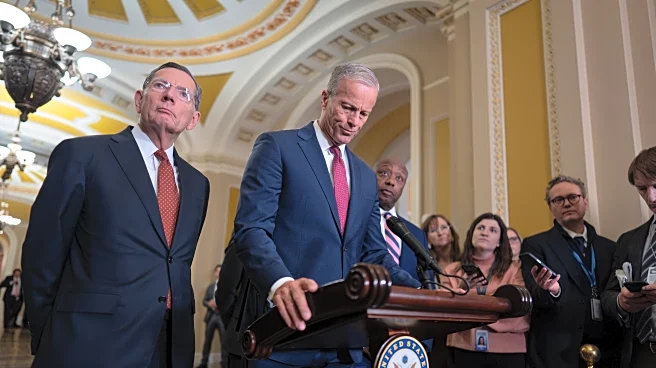
The Senate will soon deliberate on Markwayne Mullin's confirmation as the new DHS Secretary. This process will be pivotal in determining the future direction of the department. If confirmed, Mullin will need to address the challenges of restoring confidence in immigration enforcement and improving the efficiency of disaster relief operations. The administration's announcement of 'The Shield of the Americas' initiative will also be a key development to watch, as it may redefine U.S. security policies in the region. Political leaders, advocacy groups, and international partners will likely react to these changes, influencing the broader discourse on national security and immigration.