






What's Happening?
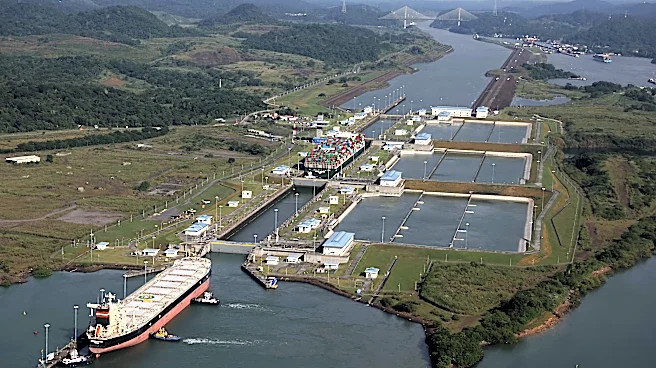
The Panama Canal Authority has announced plans to lower the maximum draft levels for Neopanamax vessels in two stages, starting in July and August. This decision is part of a water management strategy in response to forecasts of a severe El Niño, which
could impact water levels in Gatun Lake, the canal's primary reservoir. The draft for the largest vessels will be reduced from the normal 50 feet to 49 feet on July 24, and further to 48.5 feet on August 15. These measures aim to prevent disruptions similar to those experienced during the 2022-2023 drought, which led to significant shipping delays and increased transit costs.
Why It's Important?
The Panama Canal is a critical global shipping route, and any restrictions on vessel drafts can have significant implications for international trade. Lowering the draft levels could lead to increased shipping costs and delays, as vessels may need to reduce their cargo loads or seek alternative routes. The canal's management strategy is crucial to maintaining smooth operations and minimizing economic disruptions. The proactive measures taken by the Panama Canal Authority highlight the importance of adaptive strategies in response to climate-related challenges, ensuring the canal remains a reliable passage for global maritime traffic.
What's Next?
The Panama Canal Authority will continue to monitor water levels and adjust its management strategies as needed. The maritime community is expected to cooperate with the new draft restrictions, and the authority will likely communicate any further changes promptly. Shipping companies may need to plan for potential delays and increased costs, while the authority works to maintain efficient canal operations. The situation underscores the need for ongoing investment in water management infrastructure to mitigate the impacts of climate variability on critical trade routes.