



What's Happening?
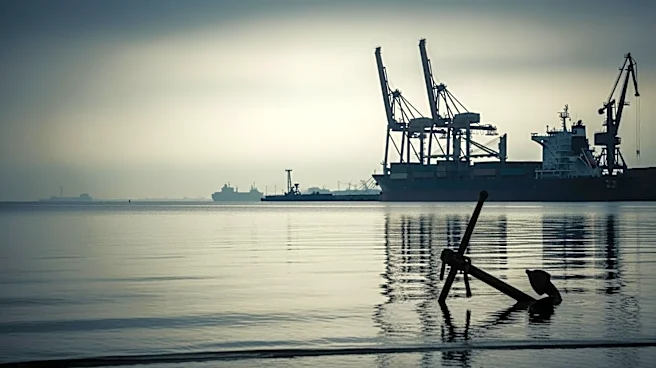
The European Union has announced its 20th round of sanctions targeting Russia, focusing heavily on the Russian energy sector. However, a complete ban on shipping services for Russian oil exports was notably absent from the sanctions list. This decision
came after Greece and Malta, both with significant shipping interests in the Russian energy trade, opposed the ban. Their opposition was enough to block the proposal, as EU sanctions require unanimous approval. The final text of the sanctions includes the ban but postpones its implementation indefinitely. Currently, EU shipping services are allowed for Russian crude oil exports if the crude is sold below a specified price limit, a system known as the 'price cap' adopted by the G7. Despite calls from Sweden and Finland to replace this policy with a blanket ban, the proposal was not enacted.
Why It's Important?
The decision to defer the ban on maritime services for Russian oil has significant implications for the EU's energy policy and its stance against Russia. By allowing continued access to shipping services, Russia can maintain its oil exports, which are crucial for its economy. This move is seen as a victory for Moscow, as it can continue to leverage its energy resources despite ongoing sanctions. The opposition from Greece and Malta highlights the complexities within the EU, where member states' economic interests can influence collective foreign policy decisions. The postponement of the ban also underscores the challenges the EU faces in balancing economic interests with political and ethical considerations in its response to Russia's actions in Ukraine.
What's Next?
The indefinite postponement of the ban suggests that the EU will continue to rely on the 'price cap' system for the foreseeable future. However, the situation remains fluid, and further developments in Russia's actions or changes in EU member states' positions could lead to renewed discussions on the ban. The EU's approach to sanctions and energy policy will likely continue to evolve as it seeks to balance internal economic interests with external political pressures. Additionally, the EU's decision to sanction 46 more 'shadow fleet' vessels and one insurer, along with measures to prevent second-hand resale to Russian interests, indicates ongoing efforts to tighten restrictions on Russia's energy sector.