
What's Happening?
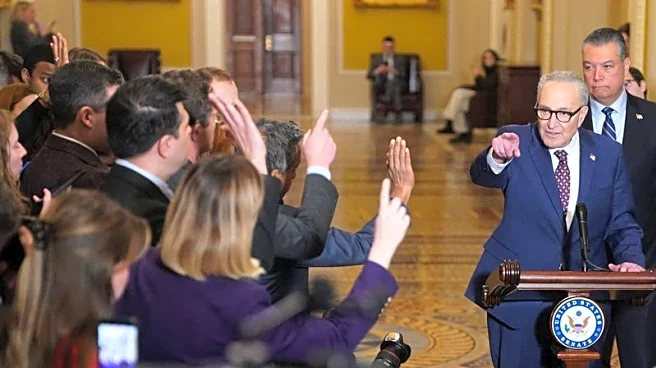
The U.S. Senate has passed a funding bill to prevent a government shutdown, extending funding for most federal departments through the end of September. However, the Department of Homeland Security (DHS)
will only receive funding for two weeks. This decision comes after Democrats demanded changes to immigration enforcement policies following two high-profile incidents involving DHS agents. The bill, supported by President Trump and Senate Democratic leaders, now moves to the House for a vote. Speaker Mike Johnson plans to hold this vote on Monday, potentially avoiding a prolonged shutdown. The temporary funding lapse is not expected to significantly impact federal operations, as most employees do not work over the weekend. The Senate's decision reflects ongoing debates over immigration policy, with Democrats seeking reforms to Immigration and Customs Enforcement (ICE) and Customs and Border Protection (CBP).
Why It's Important?
This legislative move is crucial as it temporarily averts a government shutdown, which could disrupt federal operations and services. The decision to delay DHS funding highlights the contentious nature of immigration policy in the U.S. and the political divide over enforcement practices. Democrats aim to use the two-week period to negotiate reforms, including stricter requirements for immigration arrests and increased accountability for agents. The outcome of these negotiations could significantly impact immigration enforcement and the broader political landscape. The situation underscores the challenges in balancing national security concerns with calls for humane immigration policies.
What's Next?
The House is expected to vote on the Senate's funding package on Monday. If passed, it will prevent a prolonged government shutdown. Meanwhile, Democrats will push for negotiations on DHS reforms, seeking to address their concerns over ICE and CBP practices. The outcome of these talks will be pivotal, as any agreed-upon changes will require bipartisan support to pass in the Senate. The political dynamics in the coming weeks will be closely watched, as they could influence future immigration policy and the broader legislative agenda.