







What's Happening?
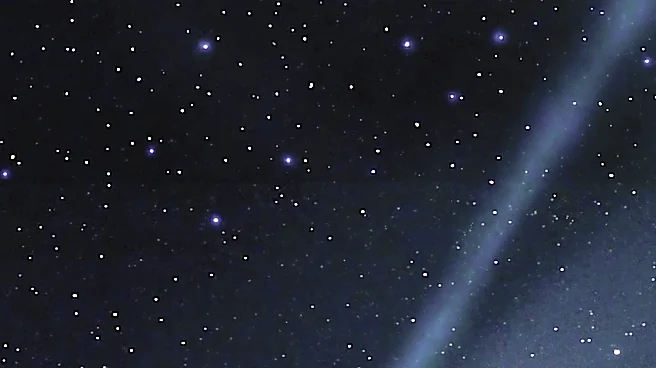
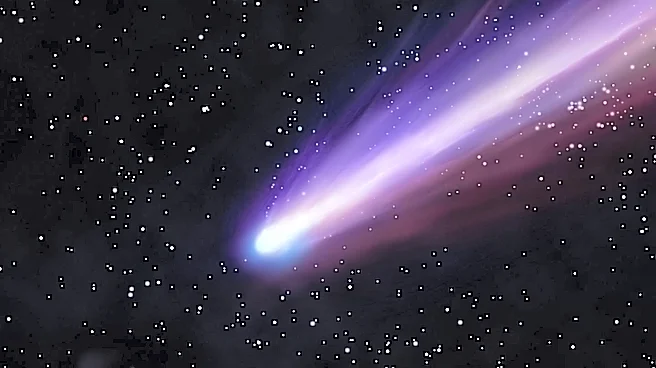
Comet Tempel 2 is currently visible in the night sky, offering a unique viewing opportunity as it approaches its perihelion in early August. The comet, also known as 10P/Tempel, is undergoing visual changes as Earth passes through its orbital plane, causing
its tail to appear as a thin line extending from both sides of the nucleus. This celestial event is best observed after the Moon sets, with the comet located near the star Deneb Algedi in the constellation Capricornus. Recent observations place the comet at a 9th magnitude, making it visible with binoculars or a small telescope.
Why It's Important?
The visibility of Comet Tempel 2 provides a rare opportunity for astronomers and sky enthusiasts to observe a comet's tail from an edge-on perspective. This event enhances public interest in astronomy and encourages educational activities related to celestial phenomena. Observing such events can inspire future generations to pursue careers in science and technology, contributing to advancements in space exploration and research. Additionally, the comet's appearance serves as a reminder of the dynamic nature of our solar system and the ongoing need for astronomical studies.