




What's Happening?
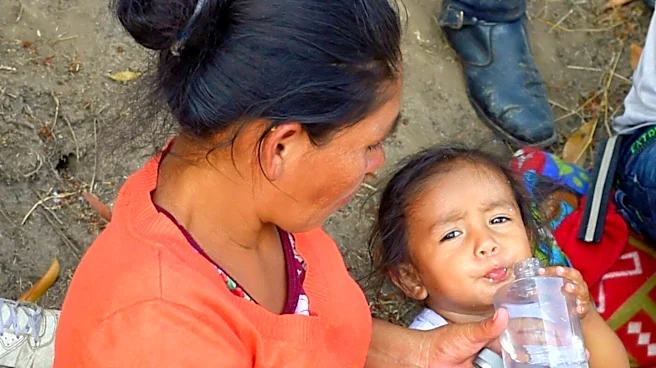
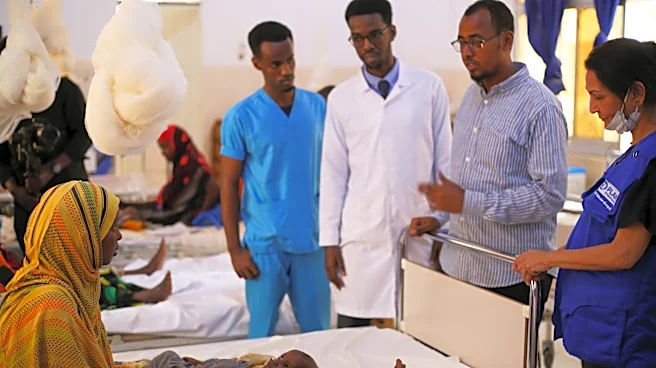
Médecins Sans Frontières (MSF) reports a significant drop in funding for tackling malnutrition in Somalia, with U.S. support falling from $70 million last year to zero this year. This reduction comes amid a surge in child malnutrition cases, with one
in four children in displacement camps severely malnourished. The funding cuts have left aid agencies struggling to meet rising needs, exacerbated by failed rainy seasons and ongoing conflict. MSF has admitted 22,000 nutrition cases this year, an 80% increase from last year, but faces challenges in scaling up interventions due to reduced donor interest. The crisis is compounded by a lack of food and water, leading to repeated hospital admissions for malnourished children.
Why It's Important?
The funding cuts have severe implications for Somalia's ability to address its growing hunger crisis. With reduced financial support, aid agencies are unable to provide adequate nutrition and healthcare to vulnerable populations, particularly children. This situation risks escalating into a full-blown famine, reminiscent of past crises in the region. The lack of international support highlights the challenges of sustaining humanitarian efforts in conflict-affected areas, where needs are high but resources are limited. The crisis underscores the importance of consistent and adequate funding to prevent loss of life and long-term developmental setbacks in affected communities.
What's Next?
Without immediate intervention, the situation in Somalia could deteriorate further, leading to increased mortality rates and displacement. Aid agencies are calling for urgent international support to prevent a famine declaration. The Somali government and international organizations may need to explore alternative funding sources and strategies to address the crisis. Increased advocacy and awareness efforts could help mobilize resources and political will to support humanitarian interventions. The international community's response will be critical in determining the outcome of this crisis and preventing similar situations in the future.