







What's Happening?
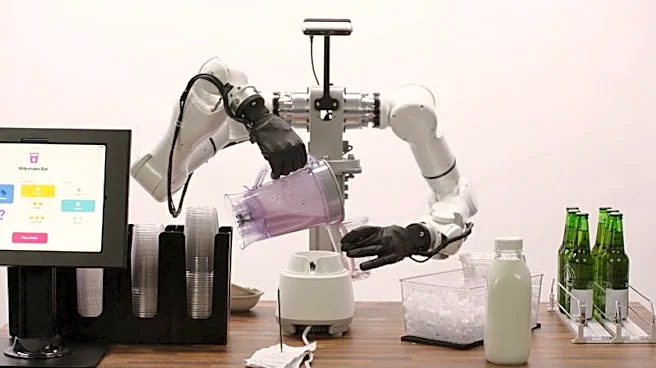
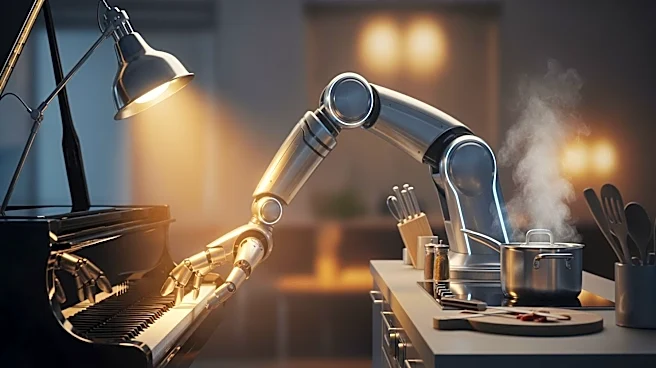
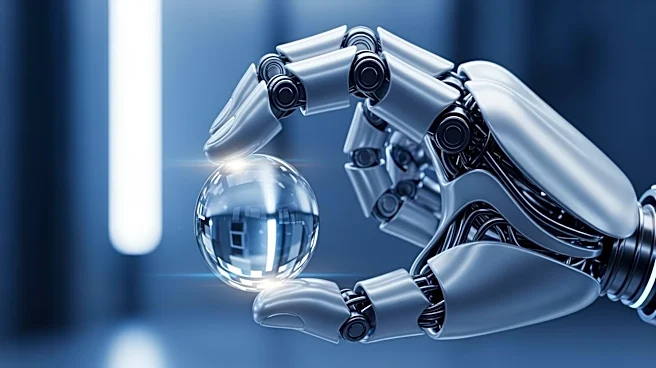
Recent advancements in artificial intelligence have enabled robotic hands to achieve human-like dexterity, as demonstrated by a new AI system called GENE-26.5. This system allows robots to perform complex tasks such as cooking, conducting experiments,
and playing musical instruments with precision. The development marks a significant milestone in robotics, showcasing the potential for AI to enhance physical manipulation capabilities. The technology is expected to have wide-ranging applications across various industries, from manufacturing to healthcare.
Why It's Important?
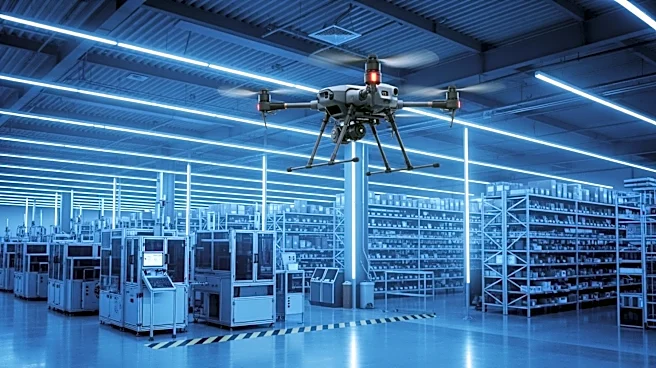
The breakthrough in robotic hand dexterity represents a major leap forward in the field of robotics, with implications for numerous sectors. Enhanced dexterity could lead to more efficient automation in manufacturing, reducing the need for human intervention in repetitive tasks. In healthcare, robots with advanced manipulation skills could assist in surgeries or patient care, improving outcomes and reducing costs. The development also raises questions about the future of work and the potential displacement of jobs, highlighting the need for policies that address the integration of AI into the workforce.
What's Next?
As AI-driven robotic dexterity continues to improve, researchers and industry leaders will explore new applications and refine the technology for specific use cases. The focus will likely be on ensuring safety and reliability, particularly in sensitive environments like healthcare. Policymakers may need to consider regulations that address the ethical and economic implications of widespread AI adoption. The ongoing development of AI in robotics will require collaboration between technologists, businesses, and governments to maximize benefits while mitigating potential risks.