




What's Happening?
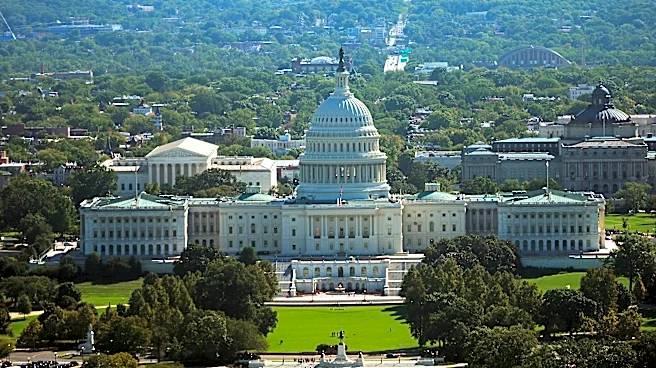
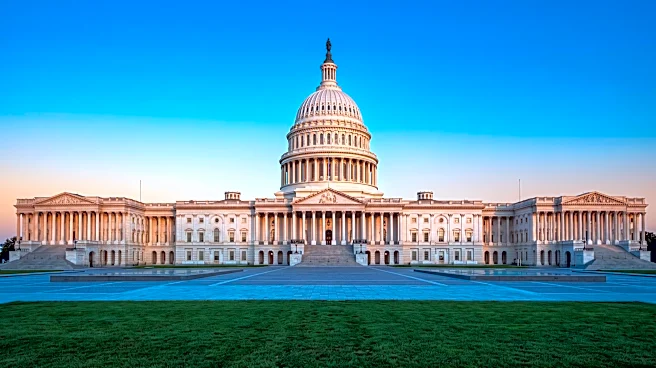
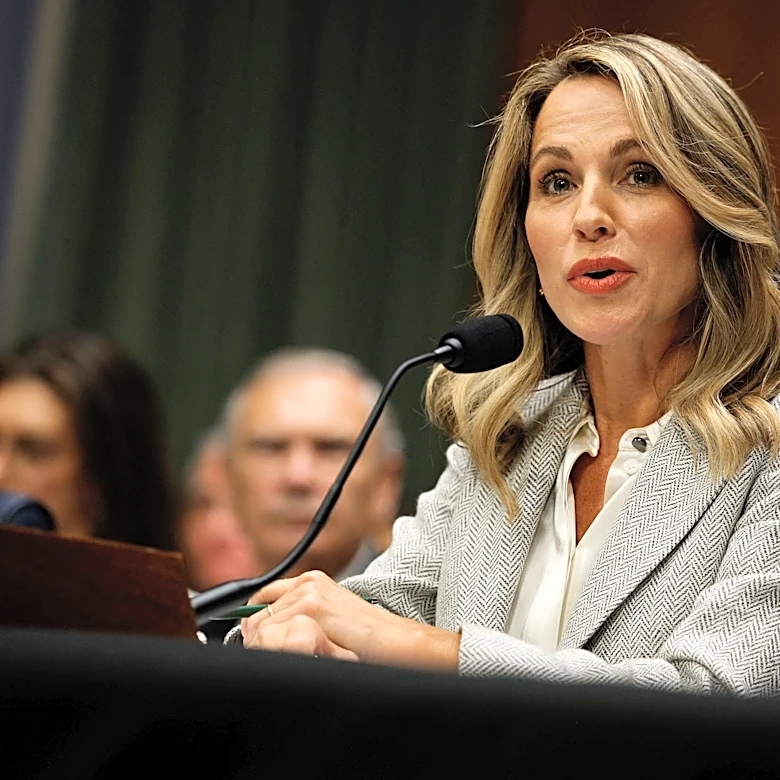
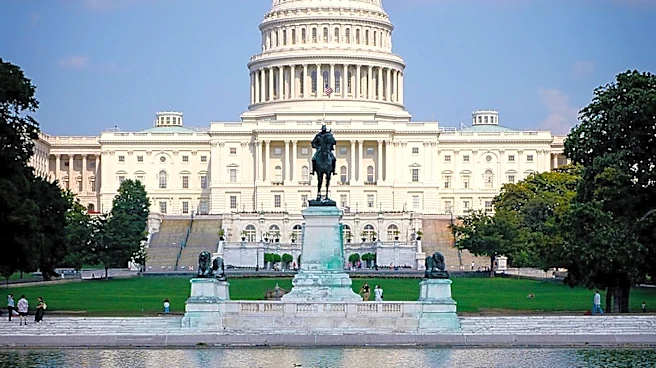
Public transportation leaders from across the U.S., organized by the American Public Transportation Association (APTA), convened on Capitol Hill for a Congressional Fly-In on September 16. Their primary objective was to urge Congress to restore advance
appropriations for public transit and passenger rail in the December 2026 Appropriations Act. While Congress approved legislation extending federal funding and Surface Transportation programs through December 11, 2026, it did not continue the advance appropriations previously provided by the Infrastructure Investment and Jobs Act (IIJA). APTA members, including transit agency CEOs and staff, met with over 100 Members of Congress and their staff, emphasizing the critical need for stable, multi-year funding to prevent significant cuts to public transit and passenger rail services nationwide.
Why It's Important?
The call to restore advance appropriations is crucial for the stability and future of public transit and passenger rail in the U.S. Without these guaranteed, multi-year funds, transit agencies and rail providers face significant uncertainty, impacting their ability to plan projects, procure equipment, and manage supply chains. APTA warns that a 20% cut to public transit and an 81% cut to passenger rail would have severe consequences, including delayed bus and railcar orders, stalled construction projects, and job losses across the country. Public transit is a vital component of the U.S. economy, with every dollar invested returning five dollars and every billion dollars supporting over 41,000 jobs. Furthermore, 77% of federal transit funding flows to private businesses, highlighting the broad economic impact of these cuts.
What's Next?
APTA's immediate next step is to continue advocating for the restoration of advance appropriations in the December 2026 Appropriations Act. They have provided detailed funding tables to Members of Congress, illustrating the potential state-by-state and urbanized-area cuts to public transit formula funds. The organization will likely continue to engage with congressional leaders, building on the support already expressed by Senate Democrats and the bipartisan House Problem Solvers Caucus. The outcome of these efforts will directly influence the financial health and operational capacity of public transit and passenger rail systems nationwide. If advance appropriations are not restored, communities can expect to see reductions in service, delays in infrastructure improvements, and potential job losses in the transportation sector.
Beyond the Headlines
The debate over advance appropriations for public transit and passenger rail extends beyond immediate funding concerns to touch upon the long-term vision for U.S. infrastructure and urban development. Consistent, predictable funding is essential for addressing the nation's substantial state-of-good-repair backlog, estimated at over $150 billion. A failure to secure this funding could exacerbate existing infrastructure deficiencies, hinder efforts to reduce carbon emissions through increased public transport use, and negatively impact urban mobility and accessibility. This situation also highlights the broader challenge of bipartisan consensus on long-term infrastructure investment, where short-term budget cycles often clash with the multi-year planning horizons required for major transportation projects. The outcome will reflect Congress's commitment to modernizing and sustaining a critical public service.