



What's Happening?
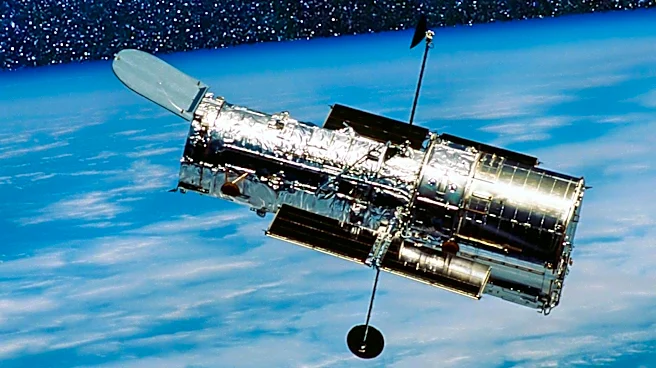
The Hubble Space Telescope Allocation Committee (HST TAC) has approved numerous programs for observation cycles, detailing a wide array of astronomical research. These programs span various fields, including studies of galaxy evolution, star formation,
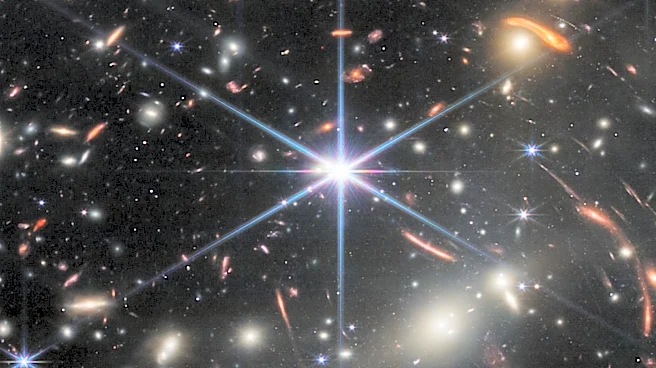
exoplanet atmospheres, and the properties of distant celestial objects. For instance, programs like 'Community Discovery Program: panchromatic CXO/VLA/HST observations of NS mergers' led by Wen-fai Fong from Northwestern University, and 'A 4% determination of the Hubble constant from gravitational time delays with maximally flexible lens mass profile' by Tommaso Treu from the University of California - Los Angeles, highlight the diverse scientific objectives. Other approved projects include investigations into the nature of dwarf galaxies, the circumgalactic medium, supernovae, and the search for exoplanets. Researchers from institutions across the United States and internationally have been granted observation time, reflecting a global collaborative effort in space science. The allocated orbits vary significantly depending on the complexity and scope of each research proposal, with some projects receiving just a few orbits and others over a hundred.
Why It's Important?
The allocation of Hubble Telescope orbits is crucial for advancing our understanding of the universe. These research programs contribute significantly to astrophysics, cosmology, and planetary science by providing high-resolution data that cannot be obtained from ground-based observatories. For the U.S. scientific community, these allocations represent opportunities for leading-edge discoveries, fostering innovation, and maintaining a prominent role in space exploration. The data collected will help refine cosmological models, understand the life cycles of stars and galaxies, and potentially identify conditions for life beyond Earth. Furthermore, the involvement of numerous U.S. universities and research institutions ensures that American scientists remain at the forefront of astronomical research, attracting talent and securing future advancements in space technology and scientific methodology. The findings from these studies often lead to new theoretical frameworks and inspire future missions, impacting the long-term trajectory of space science.
What's Next?
Following the allocation, the approved research teams will proceed with their observation plans using the Hubble Space Telescope. This involves scheduling observations, collecting data, and subsequently analyzing the vast amounts of information gathered. The results of these studies will be published in scientific journals, presented at conferences, and contribute to the broader scientific discourse. Future steps will likely include follow-up observations with Hubble or other telescopes like the James Webb Space Telescope, especially for phenomena that require multi-wavelength analysis or longer observational baselines. The insights gained from these programs will also inform the design and objectives of future space missions, influencing the next generation of astronomical instruments and research priorities. The ongoing data collection and analysis will continue to refine our understanding of cosmic phenomena and potentially lead to new, unexpected discoveries.
Beyond the Headlines
The continuous operation and allocation of resources for the Hubble Space Telescope underscore the enduring value of long-term space missions. Beyond the immediate scientific findings, Hubble's sustained contributions have fostered international collaboration, inspired public interest in science, and served as a critical training ground for generations of astronomers. The diverse range of projects, from studying distant galaxies to observing objects within our solar system, highlights the telescope's versatility and its role as a foundational tool in astrophysics. Ethically, the transparent allocation process ensures equitable access to this invaluable scientific instrument, promoting merit-based research. Legally, the ongoing maintenance and operational funding for Hubble reflect a sustained commitment from governmental bodies like NASA to fundamental scientific inquiry, reinforcing the importance of public investment in science and technology for societal advancement and knowledge expansion.