



What's Happening?
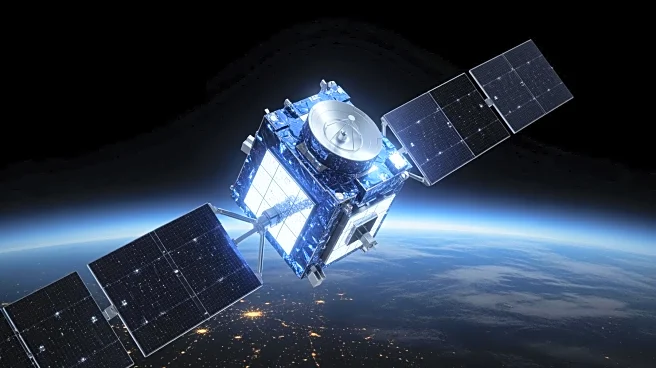
NanoAvionics, a Lithuanian satellite bus manufacturer, has signed a multi-million-euro contract with South Korean space energy startup Flexell Space. The agreement involves NanoAvionics designing and building deployable solar arrays for a Korean national
security satellite program. Flexell, originally an in-house venture of Hanwha Systems, will handle the final technical validation and quality assurance before integrating these arrays into low Earth orbit (LEO) satellites developed by Hanwha. The delivery of the solar cells is expected in the second half of 2027. This partnership also explores the integration of Flexell’s solar cells into NanoAvionics’ cubesat and microsat platforms, aiming to reduce the cost of scalable, ultra-lightweight solar arrays.
Why It's Important?
This contract marks a significant step in NanoAvionics' global expansion strategy, particularly in the South Korean space industry. It highlights South Korea's commitment to advancing its domestic space capabilities, as evidenced by the country's increased R&D funding and ambitious goals to become a leading space power by 2045. The collaboration between NanoAvionics and Flexell Space not only strengthens international partnerships but also positions South Korea as a key player in the global space sector. This development could lead to increased interest in NanoAvionics' products and services for other national security missions, further solidifying its presence in the international market.
What's Next?
The partnership between NanoAvionics and Flexell Space is expected to foster further collaborations in the space sector. South Korea's space agency, KASA, has already unveiled plans for significant investments in new capabilities, including reusable rockets and lunar spacecraft. As South Korea seeks to enhance its space infrastructure, it is likely to continue forming international partnerships, including potential collaborations with the United States on meteorological satellites and defensive space infrastructure. These efforts are part of South Korea's broader strategy to achieve its goal of becoming a top space power by 2045.