






What's Happening?
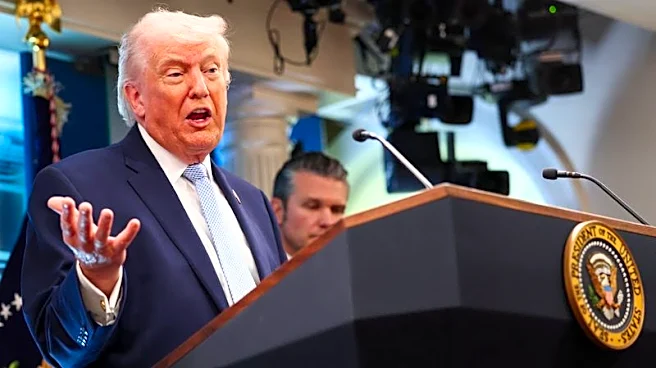
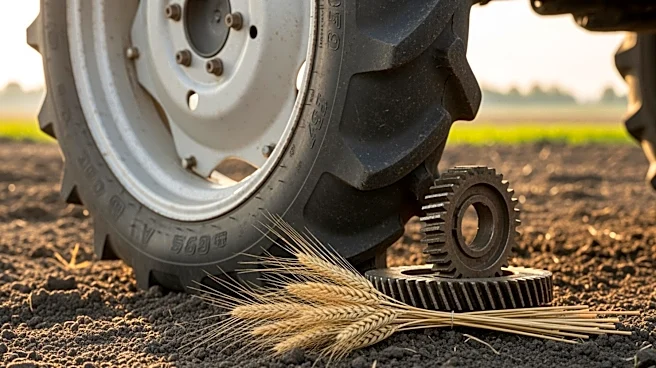
President Trump has called on farm equipment manufacturers to reduce costs for farmers during a White House event. This request comes as farmers face tight margins, high input costs, and low commodity prices for the fourth consecutive year. The administration
plans to provide $12 billion in aid and may seek additional funding from Congress. Trump also proposed policy changes, including expanding biofuel blending standards and directing the Small Business Administration to expand loan guarantees for farmers and suppliers. These measures aim to counteract rising fertilizer and diesel costs due to the Iran conflict and trade disruptions. Agricultural economists have noted that while the aid is beneficial in the short term, it does not cover losses exceeding $30 billion. Rural voters, who largely supported Trump in 2024, highlight the sector's political importance.
Why It's Important?
The call for reduced equipment costs and the proposed aid package are significant for the agricultural sector, which is facing financial strain due to high input costs and low commodity prices. The proposed policy changes could provide temporary relief to farmers, helping them manage expenses and maintain operations. However, the long-term impact remains uncertain, as the aid does not fully address the substantial losses incurred by farmers. The political implications are also noteworthy, as rural voters play a crucial role in elections, and their support for Trump underscores the importance of addressing agricultural issues. The administration's actions could influence future policy decisions and impact the agricultural industry's stability.
What's Next?
The administration's proposed aid and policy changes may lead to further discussions and negotiations with Congress to secure additional funding. Farmers and agricultural groups are likely to continue advocating for more comprehensive support to address ongoing financial challenges. The impact of the Iran conflict and trade disruptions on fertilizer and diesel costs will be closely monitored, as these factors could affect the effectiveness of the proposed measures. The agricultural sector will need to adapt to changing market conditions and explore alternative strategies to mitigate financial risks.