

What's Happening?
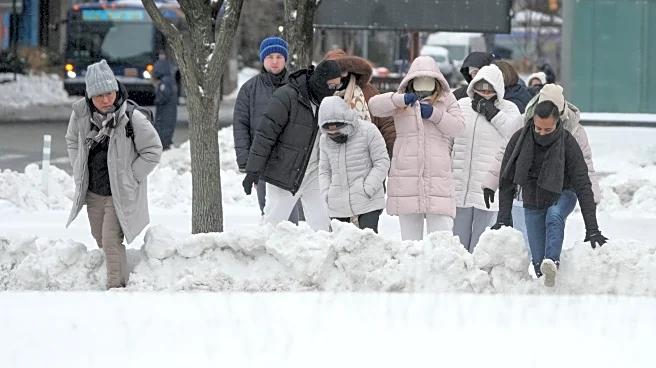
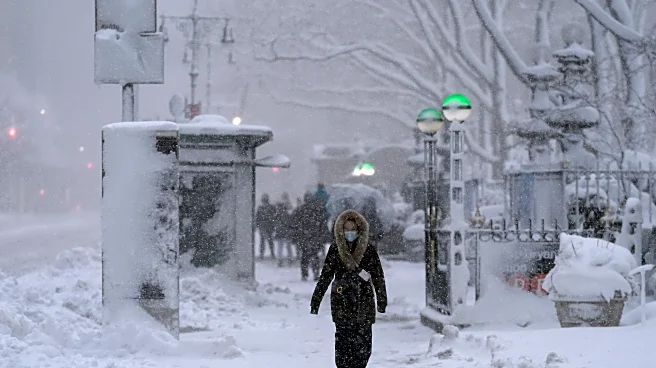
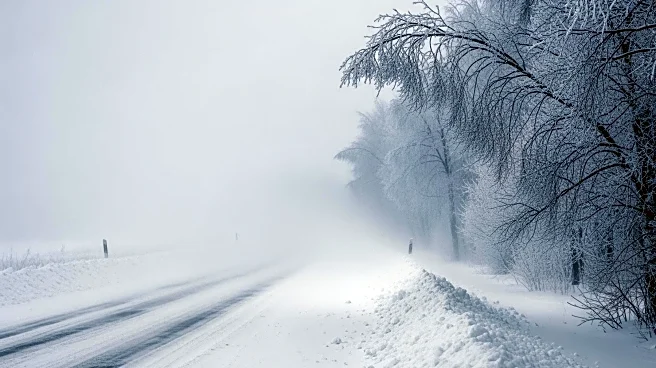
A powerful snowstorm, described as the strongest in a decade, has hit the Northeast U.S., dumping over two feet of snow in some areas. The storm led to widespread disruptions, including flight cancellations and school closures. By Tuesday, efforts to restore
normalcy were underway, with roads reopening and mass transportation resuming in some cities. Power outages affected hundreds of thousands, particularly in Massachusetts, New Jersey, Delaware, and Rhode Island. New York City prioritized moving homeless individuals into shelters as temperatures dropped. Despite the challenges, New York City schools reopened on Tuesday, a decision met with criticism due to ongoing snow removal efforts.
Why It's Important?
The storm's impact highlights the vulnerability of infrastructure and public services to extreme weather events. The decision to reopen schools in New York City, despite significant snow accumulation, underscores the challenges faced by urban areas in balancing safety and educational needs. The storm also tested emergency response systems and the resilience of power grids, with significant outages reported. The economic impact includes disruptions to travel and business operations, emphasizing the need for robust contingency planning in the face of increasingly frequent severe weather events.
What's Next?
Recovery efforts will continue as authorities work to clear roads and restore power. The situation may prompt discussions on improving infrastructure resilience and emergency preparedness. Stakeholders, including local governments and utility companies, will likely assess the response to identify areas for improvement. The storm may also influence future policy decisions regarding school closures and public safety measures during extreme weather.