
What's Happening?
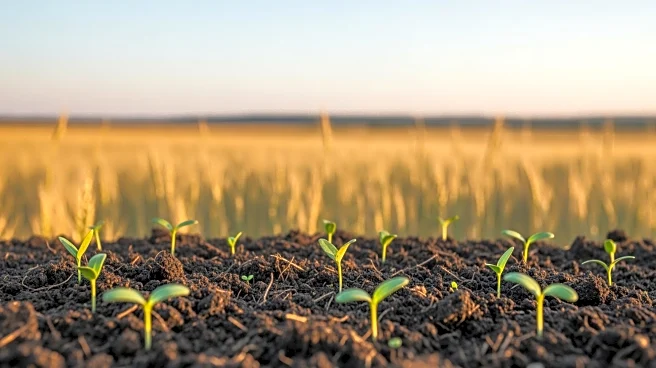
The U.S. Department of Agriculture (USDA) is advancing its commitment to regenerative agriculture, a holistic approach to farming that focuses on improving soil health, biodiversity, and water quality.
This initiative is part of a broader effort to enhance environmental processes and ensure the viability of farm production. The USDA has announced the Regenerative Pilot Program, which aims to support farmers in adopting regenerative practices through technical support and public-private partnerships. The program emphasizes minimizing soil disturbance, maintaining living roots, and integrating livestock where feasible. The USDA's approach is informed by Indigenous land management practices and seeks to adapt to local conditions. The initiative also includes the expansion of the Technical Service Provider program to offer guidance to farmers, encouraging them to adopt new practices with the support of trusted advisors.
Why It's Important?
Regenerative agriculture represents a significant shift in U.S. agricultural policy, with potential benefits for both the environment and the economy. By improving soil health and biodiversity, this approach can lead to more sustainable farming practices that reduce the need for chemical inputs and enhance resilience to climate change. Economically, the initiative could lower costs for farmers by reducing reliance on synthetic fertilizers and improving crop yields. The USDA's emphasis on public-private partnerships aims to leverage additional resources, making taxpayer dollars more effective. This initiative could also position the U.S. as a leader in sustainable agriculture, influencing global practices and policies.
What's Next?
The USDA's Regenerative Pilot Program is expected to evolve with input from the newly established Regenerative Agriculture Advisory Council, which will provide feedback from farmers and other stakeholders. This council will help ensure that the program remains responsive to the needs of the agricultural community and adapts to new evidence and practices. As the program develops, it may lead to broader adoption of regenerative practices across the U.S., potentially influencing federal agricultural policy and funding priorities. The success of this initiative could also encourage other countries to adopt similar approaches, contributing to global efforts to combat climate change and promote sustainable agriculture.