



What's Happening?
New research, supported by a Conservation Innovation Grant from the USDA’s Natural Resources Conservation Service, provides insights into effective communication strategies for addressing woody encroachment in the Southern Great Plains, particularly in Texas.
The Playa Lakes Joint Venture (PLJV) conducted a social science research project involving interviews, focus groups, and surveys with landowners to understand their motivations, barriers, and trusted sources regarding conservation. The findings emphasize the importance of starting with the landowner's goals, listening before offering advice, and using local terminology. For instance, Texans often refer to woody plant removal as 'brush management' or 'brush sculpting.' The research also highlights that landowners prioritize water savings over cost savings, with a favored message being: 'Your operation runs on rainfall. What do you want it to grow?' Understanding barriers, such as concerns about legal risks and costs for prescribed fire, is crucial before recommending solutions. The PLJV's resources aim to help conservation professionals build long-term relationships with landowners, acting as advisors rather than decision-makers, to achieve sustainable rangeland management.
Why It's Important?
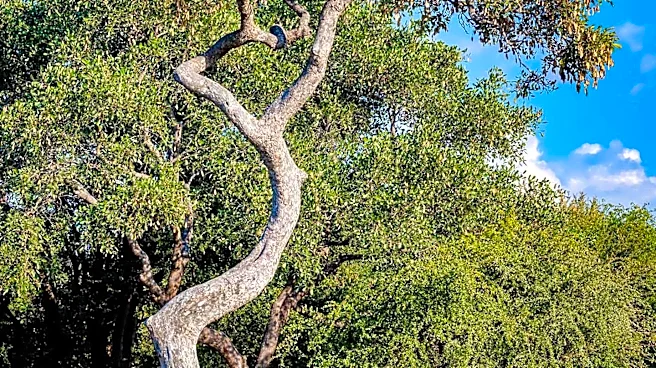
This research is crucial for improving conservation efforts in U.S. rangelands, particularly in Texas, where woody encroachment threatens grassland health. Effective communication is a significant barrier to implementing conservation practices. By understanding how to better engage landowners, conservation professionals can increase the adoption of practices that benefit both the environment and agricultural operations. Healthy grasslands are vital for biodiversity, water infiltration, and soil stability, and their degradation due to woody encroachment has economic and ecological consequences. The insights from this study can lead to more successful conservation outcomes, ensuring the long-term viability of ranching and the health of these ecosystems. This approach benefits landowners by aligning conservation efforts with their operational goals and helps the broader society by preserving valuable natural resources.
What's Next?
Conservation professionals are encouraged to utilize the communication resources developed by the PLJV, including their website, training webinars, and guides for Texas, Kansas, and Oklahoma. The next steps involve implementing these strategies to foster better relationships with landowners and increase the adoption of woody encroachment management practices. This includes actively listening to landowners' goals, using their preferred terminology, and addressing their specific concerns and barriers. The research suggests that building trust and long-term relationships is more valuable than focusing on single projects, implying a continuous engagement model. Future efforts will likely involve ongoing training for conservation professionals and continued research into landowner motivations and effective communication techniques to adapt to evolving challenges in rangeland management.
Beyond the Headlines
The research delves into the subtle but powerful role of language and trust in environmental conservation. It highlights that successful conservation is not just about scientific solutions but also about human psychology and community engagement. The emphasis on using local terminology and understanding landowners' perspectives underscores a shift from a top-down, prescriptive approach to a more collaborative and empathetic one. This has broader implications for how government agencies and non-profit organizations interact with local communities on various environmental issues across the U.S. The study also implicitly touches upon the cultural significance of land ownership and management in rural areas, where personal pride and attachment to the land are strong motivators. Recognizing these deeper connections can lead to more sustainable and widely accepted conservation practices, fostering a sense of shared responsibility for environmental stewardship.