


What's Happening?
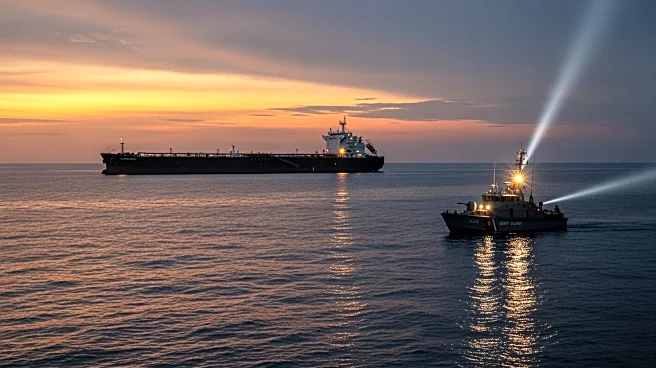
The U.S. Coast Guard has intercepted an oil tanker off the coast of Venezuela in the Caribbean Sea. This operation, confirmed by Homeland Security Secretary Kristi Noem, involved the apprehension of a vessel that had last docked in Venezuela. The action
is part of a broader U.S. effort to curb the illicit movement of sanctioned oil, which is believed to fund narco-terrorism in the region. This marks the second such seizure in December 2025, following the earlier capture of a sanctioned vessel, The Skipper, on December 10. The current operation, however, involves a tanker not listed on any sanctions by the U.S., EU, UK, or UN. The U.S. government, under President Trump's directive, has intensified its blockade on sanctioned oil tankers associated with Venezuela, aiming to pressure President Nicolas Maduro's regime.
Why It's Important?
This development underscores the escalating tensions between the United States and Venezuela, particularly concerning the latter's oil trade. The U.S. blockade aims to disrupt financial channels that allegedly support criminal activities linked to the Venezuelan government. This action could further strain diplomatic relations and impact global oil markets, as Venezuela is a significant oil producer. The U.S. strategy reflects a broader geopolitical maneuver to isolate Maduro's government, which could have implications for international trade and regional stability. Stakeholders in the oil industry, as well as countries reliant on Venezuelan oil, may face economic repercussions as the U.S. enforces its sanctions more aggressively.
What's Next?
The U.S. is likely to continue its enforcement actions against vessels associated with Venezuela, potentially leading to further seizures. This could provoke responses from the Venezuelan government and its allies, possibly escalating into diplomatic confrontations. The international community may also react, with some countries possibly challenging the U.S. blockade as a violation of international trade norms. Monitoring the situation will be crucial for businesses and governments involved in the oil sector, as further disruptions could affect global oil supply and prices.
Beyond the Headlines
The U.S. blockade and subsequent seizures highlight the complex interplay between international law, trade, and national security. The legal justification for such actions may be scrutinized, especially if non-sanctioned vessels are targeted. This situation also raises ethical questions about the use of economic sanctions as a tool for political change, particularly when they impact civilian populations. Long-term, this could influence how countries engage in economic diplomacy and manage conflicts involving resource-rich nations.