





What's Happening?
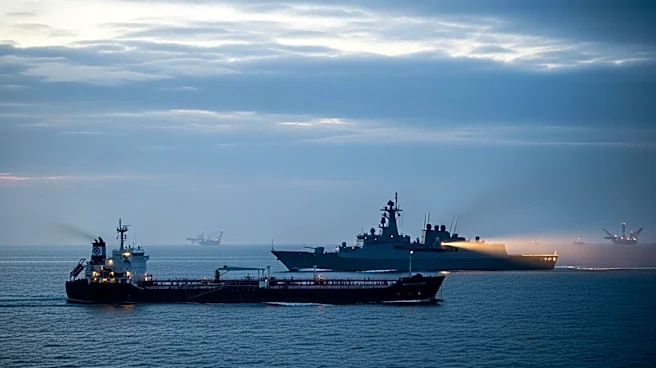
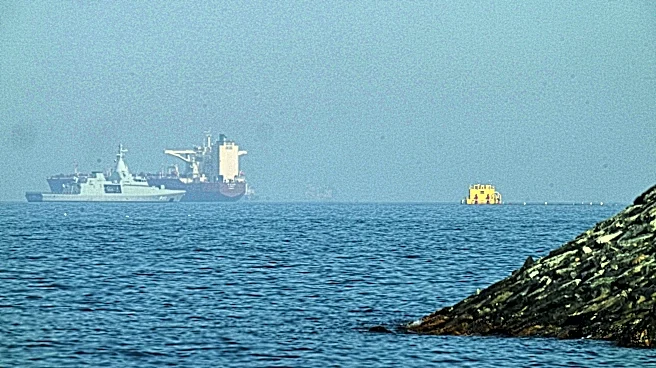
Iran has announced a new process for ships seeking to transit the Strait of Hormuz, following reports of a U.S. peace proposal. The Islamic Revolutionary Guard Corps stated that 'safe, stable passage' will be possible with new protocols. Shipowners are
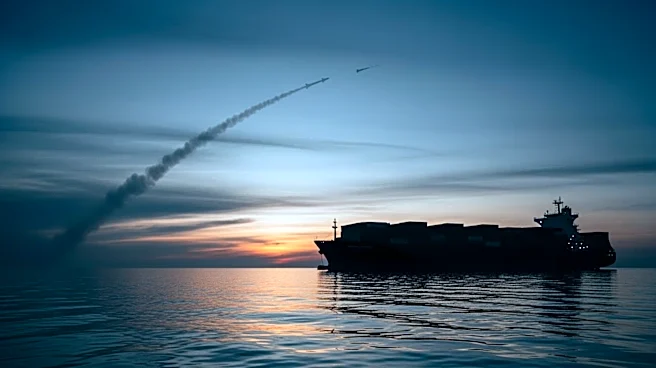
required to contact the Persian Gulf Strait Authority for transit approval, providing detailed information about their vessels. Despite this announcement, many shipowners remain cautious, citing recent attacks and the lack of clarity on the conditions. The reopening of the strait is critical for global oil markets, as its closure has significantly impacted supply and prices.
Why It's Important?
The Strait of Hormuz is a vital route for global oil shipments, and its closure has led to increased fuel prices and economic pressures worldwide. The new transit process announced by Iran could potentially ease these pressures if it leads to a reopening of the strait. However, the uncertainty and recent attacks have made shipowners wary, highlighting the ongoing risks and geopolitical tensions. The situation underscores the importance of diplomatic efforts to resolve the conflict and stabilize global markets.
What's Next?
Shipowners and international stakeholders will be closely monitoring the implementation of Iran's new transit process. The response from the global shipping industry will be critical in determining the effectiveness of the new protocols. Additionally, the outcome of the U.S. peace proposal and Iran's response will play a significant role in shaping the future of the conflict and its impact on global markets. The international community will be watching for any developments that could lead to a resolution and a reopening of the strait.