









What's Happening?
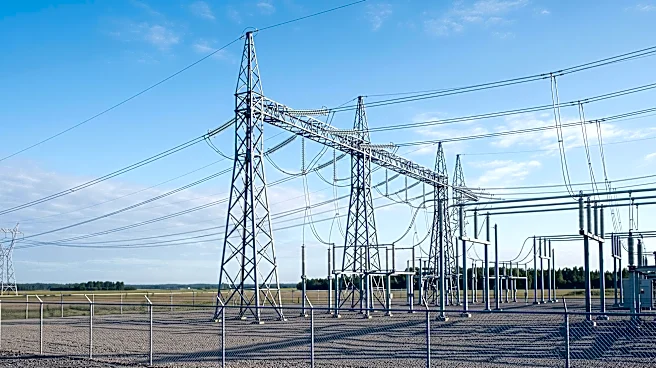
German police are investigating an incident involving an unexploded incendiary device found at a power substation in Turnow-Preilack, in the eastern state of Brandenburg. The Brandenburg state criminal police office has taken over the investigation. Grid
operator 50Hertz reported that unidentified perpetrators caused damage to several power lines in its transmission grid, though the incendiary device itself did not detonate. The incident led to a brief power cut, but all power lines are now operational, and the general electricity supply was not significantly affected. Police were deployed to the substation around 8 a.m. after receiving information about the incident, and authorities confirmed there was no danger to the public. Interior Minister Jan Redmann stated that rockets carrying conductive material were fired into extra-high-voltage lines, causing two short circuits. He noted that the devices, found in double digits, were specially designed and required significant setup, unlike typical fireworks. The attack caused a spontaneous shutdown of one unit at the Jaenschwalde power plant, which was expected to be restored by Tuesday evening.
Why It's Important?
This incident highlights Germany's increasing vulnerability to attacks on its critical infrastructure, a concern that extends to airports and other essential services. The alleged sabotage at the Turnow-Preilack substation, a critical high-voltage node connecting Brandenburg's largest power plant to the 50Hertz transmission grid, underscores the potential for significant disruption. Interior Minister Jan Redmann emphasized that Germany is 'far too vulnerable' when it comes to critical infrastructure. The event adds to a growing list of incidents that have prompted German officials to consider enhanced protection measures against what they describe as a rising threat from cyber and hybrid attacks. The incident's nature, involving specially designed rockets, suggests a sophisticated attempt at disruption, raising questions about the perpetrators' capabilities and motives. The quick restoration of power lines and the limited impact on the general electricity supply demonstrate the resilience of the grid but also serve as a stark warning about potential future threats.
What's Next?
The Brandenburg state criminal police office will continue its investigation into the incident, focusing on identifying the perpetrators and their motives. Interior Minister Jan Redmann has not ruled out the involvement of foreign powers or left-wing activists, suggesting a broad scope for the inquiry. Authorities are still searching the site for additional devices and evidence. The incident is likely to intensify discussions within Germany regarding the protection of critical infrastructure, potentially leading to new security measures and policies. Germany is already on high alert due to a perceived increase in cyber and hybrid attacks, and this event could accelerate efforts to bolster defenses. The German government may also consider further responses, especially if foreign involvement is confirmed, as indicated by recent actions following an attempted drone attack at Leipzig/Halle airport. The grid operator 50Hertz and power plant operator LEAG will likely review their security protocols in light of the attack.
Beyond the Headlines
The attack on the Brandenburg power substation carries deeper implications for national security and geopolitical stability. The use of specially designed rockets suggests a level of planning and resources beyond typical vandalism, pointing towards potentially state-sponsored or highly organized non-state actors. This incident, coupled with Germany's recent accusation against Russia for an attempted drone attack at Leipzig/Halle airport, highlights a broader pattern of hybrid warfare where critical infrastructure becomes a target. The vulnerability of essential services like power grids to such attacks could erode public trust in government's ability to protect its citizens and maintain stability. Furthermore, the incident could prompt a re-evaluation of international cooperation on cybersecurity and critical infrastructure protection, as these threats often transcend national borders. The ongoing investigation will not only seek to identify those responsible but also to understand the strategic objectives behind such acts, potentially revealing new dimensions of modern conflict.