



What's Happening?
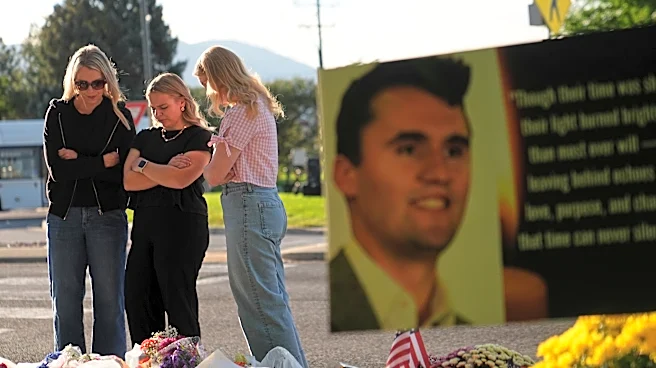
Candace Owens has continued to raise questions regarding conflicting accounts surrounding the events following Charlie Kirk's shooting. Specifically, Owens has questioned whether Frank Turek performed CPR during the drive to the hospital. This inquiry
highlights discrepancies between Turek's account and that of Brian Harpole. The situation has drawn attention to the arguments used to dismiss the significance of these discrepancies, with some observers noting similarities to defenses recently employed by Andrew Wilson. The ongoing discussion suggests a lack of clarity and agreement among those involved or commenting on the incident, leading to persistent public questioning from figures like Owens.
Why It's Important?
The continued questioning by Candace Owens regarding the Charlie Kirk incident is important because it underscores a broader issue of transparency and accountability within public narratives, particularly concerning events involving prominent figures. When conflicting accounts emerge, especially regarding critical details like life-saving measures, it can erode public trust and fuel speculation. For organizations and individuals involved, the inability to present a consistent and clear narrative can lead to reputational damage and prolonged scrutiny. This situation also highlights the role of public commentators like Owens in challenging official or widely accepted versions of events, potentially influencing public perception and demanding further clarification from those involved.
What's Next?
The ongoing nature of Candace Owens' inquiries suggests that the conflicting accounts surrounding the Charlie Kirk incident will likely continue to be a subject of public discussion. It is probable that those involved, such as Frank Turek and Brian Harpole, may face renewed pressure to address the discrepancies in their statements or provide further details to clarify the timeline and actions taken. The comparison of their defenses to those of other public figures indicates a pattern that could lead to broader discussions about how information is managed and presented in sensitive situations. Depending on the responses, this could either lead to a resolution of the conflicting narratives or further entrench the skepticism and questions raised by Owens and others.
Beyond the Headlines
Beyond the immediate details of the Charlie Kirk incident, Candace Owens' persistent questioning touches upon deeper implications concerning media scrutiny and the construction of truth in the public sphere. In an age where information spreads rapidly and narratives can be easily challenged, the demand for factual consistency becomes paramount. This situation highlights the power of influential commentators to shape public discourse by identifying and amplifying inconsistencies. It also implicitly raises questions about the responsibility of public figures and their associates to provide accurate and verifiable information, especially when dealing with serious events. The ongoing debate serves as a case study in how conflicting testimonies can prolong a news cycle and impact public perception of individuals and organizations.