


What's Happening?
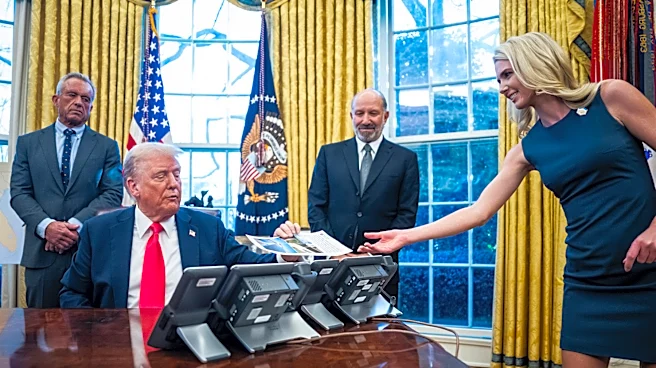
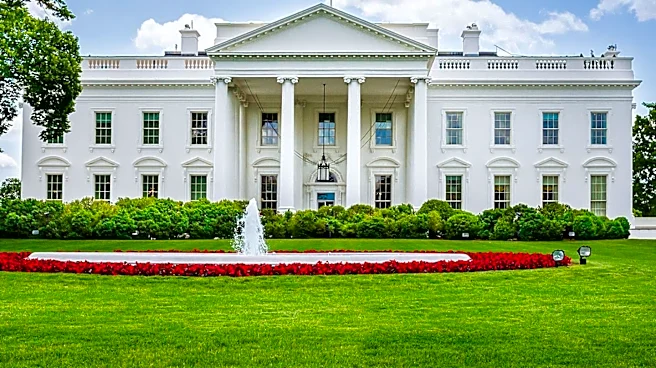
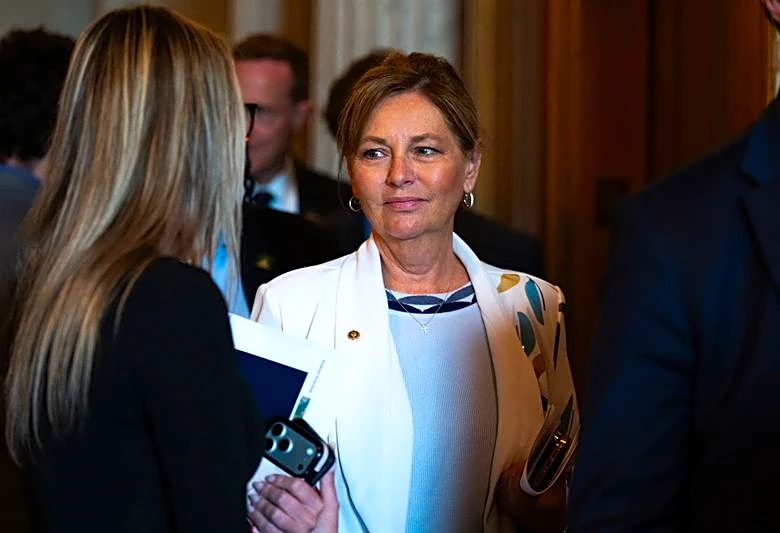
Natalie Harp, a close advisor to President Trump, reportedly worked in the White House for a year without the necessary security authorization, according to a report by MS Now. Harp, a 35-year-old former television presenter, became a central figure in political
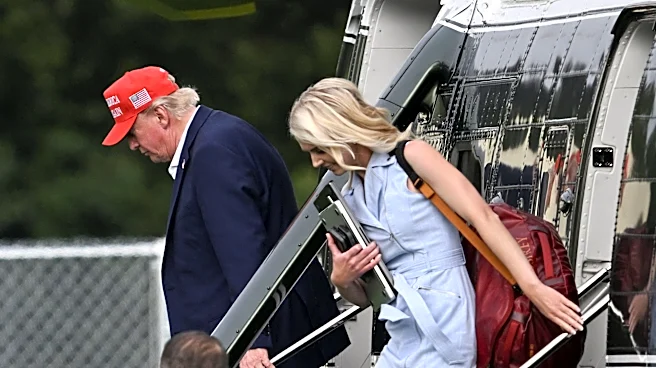
discussions after Democratic Senator Jon Ossoff of Georgia made comments implying her significant influence and proximity to President Trump. Ossoff's remarks referenced Harp as one of the few trusted individuals who traveled with President Trump on a secret flight from Ankara following a NATO summit in Turkey, prompted by a supposed threat of an Iranian attack. White House spokesperson Davis Ingle responded to Ossoff's comments, accusing the senator of being a 'pathetic effeminate theater kid' and a 'small-time loser.' Harp, known as 'the human printer' for carrying a portable printer to provide President Trump with relevant news, joined his team in 2022 after leaving her television career. Her constant presence and perceived influence have reportedly caused unease among some within the White House.
Why It's Important?
The revelation that a key advisor to President Trump operated without a security clearance for an extended period raises significant national security concerns. Security clearances are fundamental to protecting classified information and ensuring that individuals with access to sensitive government operations have undergone thorough vetting. The absence of such a clearance for an advisor described as 'closest' to the President could expose vulnerabilities in information security protocols and potentially compromise confidential discussions or documents. This situation also highlights potential issues with White House staffing procedures and oversight, particularly regarding individuals in influential, non-traditional roles. The public exchange between Senator Ossoff and the White House underscores the political sensitivity surrounding the President's inner circle and the scrutiny applied to those with direct access to the nation's highest office. The implications extend to public trust in government transparency and accountability, as questions about who has access to the President and under what authority become prominent.
What's Next?
The report of Natalie Harp working without a security clearance is likely to prompt further scrutiny from Congress and the media. Democratic lawmakers may call for investigations into White House security protocols and the process by which advisors are granted access to sensitive information and presidential activities. The White House may face pressure to provide a detailed explanation for the lapse in security clearance and outline corrective measures to prevent similar occurrences in the future. This issue could also become a point of contention in upcoming political debates, with opponents of President Trump using it to question the administration's adherence to established security procedures. Depending on the political climate, there could be calls for policy changes regarding the vetting of presidential advisors, particularly those who travel with the President on sensitive missions. The ongoing public discussion will likely focus on the balance between presidential discretion in choosing staff and the imperative of national security.
Beyond the Headlines
Beyond the immediate security implications, this incident touches upon broader themes of presidential power, the informal structures of influence within the White House, and the evolving role of personal advisors. The description of Harp as 'the human printer' and her constant proximity to President Trump suggests a reliance on informal channels for information and advice, potentially bypassing traditional bureaucratic processes. This raises questions about the formal and informal mechanisms through which information reaches the President and how decisions are shaped. The controversy also highlights the challenges of managing public perception and political narratives, especially when personal relationships intersect with official duties. The intense focus on Harp's role and the White House's defensive reaction indicate the high stakes involved in controlling the narrative around presidential staff and their qualifications. This event could contribute to a larger discussion about the need for clear guidelines and transparency regarding the roles and access levels of all presidential advisors, regardless of their formal titles or positions.