






What's Happening?
The U.S. National Oceanic and Atmospheric Administration (NOAA) has projected an over 83% probability of strong to very strong El Niño conditions occurring between January and March 2027. This natural climate phenomenon is causing concern among scientists
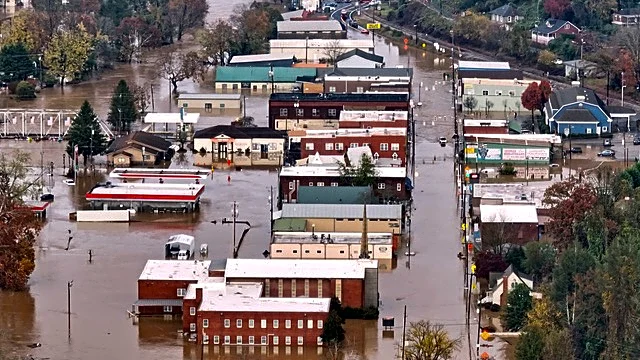
due to an unprecedented rate of surface warming. Historically, major El Niño events, such as those in 1982-83, 1997-98, and 2015-16, have led to extreme flooding in some regions and severe drought in others, causing widespread disruption to ecosystems and economies. The current El Niño is being described as a 'super' or 'Godzilla' event, which is expected to alter global weather patterns, potentially bringing more extreme heat, drought, and flooding. These climate-driven events are occurring more frequently and are leading to cascading, interrelated effects, creating what experts refer to as 'polycrisis' scenarios where multiple connected crises happen simultaneously.
Why It's Important?
The predicted strong El Niño conditions are significant because they can trigger polycrises, where health and energy systems fail simultaneously, impacting the U.S. and global infrastructure. For instance, hospitals could become overwhelmed by respiratory illnesses from wildfire smoke, heatstroke, and other climate-related health issues, while the electricity grid might fail due to increased demand from air conditioning during extreme heat. Such scenarios disproportionately affect vulnerable populations, including underhoused individuals, people with disabilities, lower-income households, and Indigenous communities. The strain on the energy system, with milder winters reducing hydroelectric inflows and extreme summer heat decreasing the efficiency of solar and gas turbines, coincides with peak demand, creating a critical vulnerability. This interconnectedness means that failures in one system can exacerbate problems in another, leading to widespread societal disruption and increased mortality, as seen in past heat domes.
What's Next?
The forecast of a strong El Niño provides lead time for preparation, emphasizing the need for proactive measures to mitigate potential polycrises. Investments in grid resilience, such as energy storage, demand flexibility, interties (transmission links), and backup power for critical facilities, are crucial. Establishing cooling centers with assured power is also vital to protect vulnerable populations during extreme heat events. Additionally, bolstering critical supply chains and identifying patients whose health depends on a stable power grid are essential steps. These preparations aim to harden both the energy and health systems against the anticipated stresses of El Niño-pattern weather, transforming resilience budgets into prevention budgets. The goal is to act on this warning before the emergency is at the doorstep, ensuring that communities are better equipped to handle simultaneous crises.
Beyond the Headlines
The concept of a 'polycrisis' highlights the deeper implications of climate change, revealing how seemingly disparate events can converge to create systemic vulnerabilities. This goes beyond simple weather events, touching upon ethical considerations regarding equitable access to resources during crises, particularly for marginalized communities. The interconnectedness of health and energy systems underscores a fundamental shift in how societies must approach disaster preparedness, moving from isolated responses to integrated strategies. The long-term implications include the need for sustainable infrastructure development, robust public health initiatives, and policies that address energy poverty. This situation also prompts a re-evaluation of urban planning and resource management to build more resilient communities capable of withstanding the complex challenges posed by a changing climate.