

What's Happening?
Farming groups within the European Union have expressed strong opposition to a newly approved trade agreement with the Mercosur bloc, which includes Brazil, Argentina, Paraguay, and Uruguay. The deal, which was supported by a majority of EU member states,
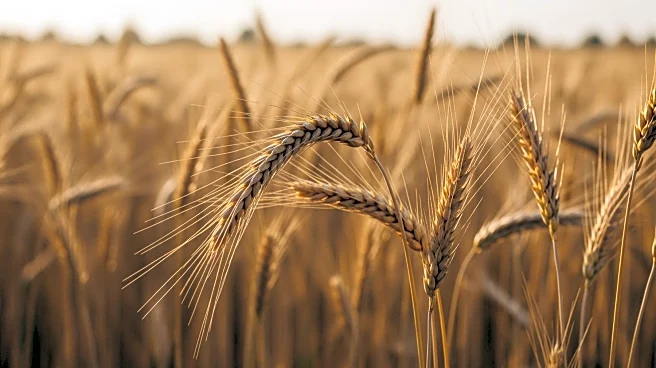
aims to create the world's largest free trade zone by reducing import duties on a wide range of goods. European Commission President Ursula von der Leyen has described the agreement as mutually beneficial, promising increased prosperity and opportunities. However, Copa-Cogeca, representing EU farm organizations, has criticized the deal as 'fundamentally unbalanced' and 'flawed,' arguing that it undermines trust in European governance and democratic processes. The agreement includes safeguard mechanisms to protect sensitive goods, but farming groups remain concerned about the potential competition from South American producers.
Why It's Important?
The trade agreement between the EU and Mercosur is significant as it represents a major shift in international trade relations, potentially impacting various sectors, including agriculture, automotive, pharmaceuticals, and chemicals. For the U.S., this development could influence trade dynamics, as the EU is a major global economic player. The deal's focus on reducing tariffs could lead to increased competition for U.S. agricultural exports to the EU, as South American products may become more competitive. Additionally, the agreement highlights the EU's commitment to expanding its trade partnerships, which could affect U.S. trade negotiations and strategies. The concerns raised by EU farming groups also underscore the challenges of balancing trade liberalization with domestic industry protection, a relevant issue for U.S. policymakers.
What's Next?
The trade agreement still requires ratification by the European Parliament, and its implementation will be closely monitored by both supporters and critics. EU farming groups, led by Copa-Cogeca, plan to continue mobilizing against the accord, potentially influencing the ratification process. The European Commission has promised to address farmers' concerns through safeguard measures and import controls, but the effectiveness of these measures will be scrutinized. As the deal progresses, it may prompt reactions from other global trade partners, including the U.S., which could seek to reassess its trade agreements with both the EU and Mercosur countries. The outcome of this agreement could set a precedent for future trade negotiations and influence global trade policies.