



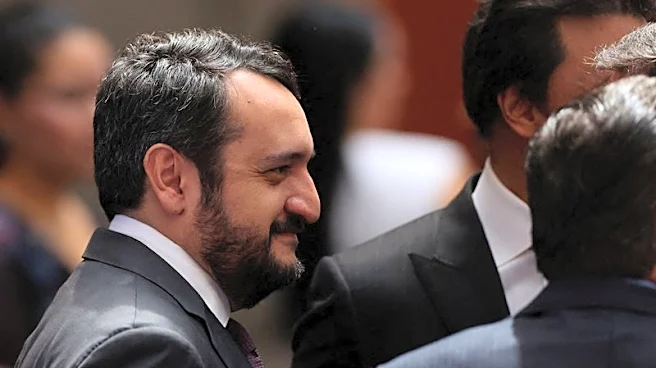
What's Happening?
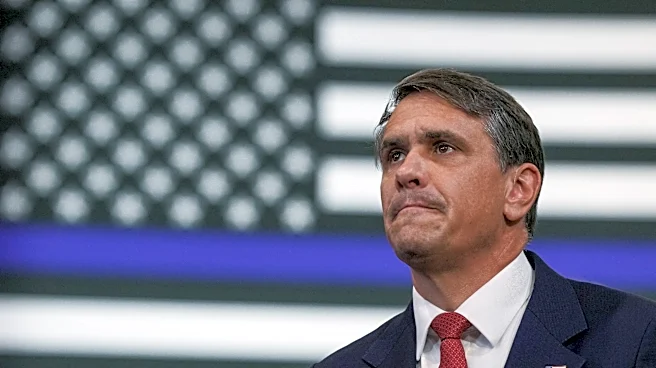
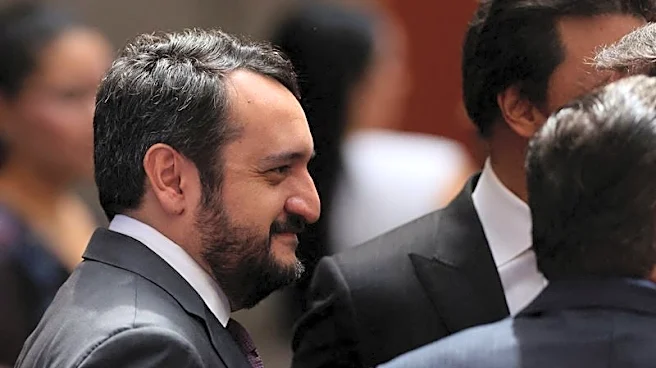
The Trump administration has appointed Juan Pablo Segura, a Republican businessman from Virginia, as the new Assistant Secretary of State for Western Hemisphere Affairs. This office within the State Department directly oversees relations with Brazil and
Latin America. Segura replaces career diplomat Michael Kozak, who had served in an interim capacity since January of the previous year. Kozak was notably involved in the revocation of the visa for the Brazilian ambassador in Washington, Maria Luiza Viotti. Segura's appointment was announced on August 17th and received Senate approval on August 7th, with 51 votes in favor and 47 against. His confirmation was part of a group of 74 new Trump administration officials approved by the Senate. During his Senate hearing, Segura praised the Trump administration's "ambitious" Latin America policy and referenced the Monroe Doctrine, asserting that American dominance in the region would no longer be questioned. He also emphasized commercial diplomacy to benefit American companies and counter Chinese influence in the region.
Why It's Important?
This change in leadership at the State Department's Western Hemisphere Affairs office signals a continuation and potential intensification of the Trump administration's foreign policy approach towards Latin America. The emphasis on the Monroe Doctrine and the assertion of American preeminence in the region could lead to increased tensions with countries that view this as an infringement on their sovereignty, such as Brazil under the Lula government. The focus on commercial diplomacy to favor American businesses and counter Chinese influence highlights a strategic economic competition in the region. This shift could impact trade agreements, investment flows, and diplomatic relations, potentially creating new opportunities for U.S. companies while challenging the growing economic presence of China in Latin American nations. The appointment of a political appointee over a career diplomat also suggests a desire for a more politically aligned and assertive foreign policy in the region.
What's Next?
Juan Pablo Segura is expected to implement the Trump administration's foreign policy agenda in the Western Hemisphere, which includes a strong stance against drug trafficking and a focus on countering perceived Chinese infiltration. He has expressed support for U.S. military involvement in combating drug cartels, even outside U.S. territory, indicating a potentially more aggressive approach to regional security. Segura will also prioritize commercial diplomacy, aiming to identify opportunities for increased American business presence as an alternative to Chinese companies. His mandate includes working with the Inter-American Foundation until 2032. The U.S. diplomatic relationship with Brazil, already strained by issues such as the delayed approval of the U.S. ambassador to Brazil, Daniel Perez, and the revocation of the Brazilian ambassador's visa, will likely remain a key area of focus. Segura has also committed to reviewing and monitoring human rights and political violations in countries like El Salvador, an ally of President Trump.
Beyond the Headlines
The appointment of Juan Pablo Segura and his stated adherence to the Monroe Doctrine could signify a broader reassertion of U.S. influence in Latin America, potentially reshaping geopolitical dynamics in the region. This approach, which views the region as a sphere of American influence, might be perceived by some Latin American nations as a return to historical interventionism, potentially leading to diplomatic friction and a re-evaluation of alliances. The explicit aim to counter Chinese influence also underscores a global power struggle playing out in the Western Hemisphere, where economic and strategic interests are intertwined. The emphasis on combating drug trafficking with military involvement, even extraterritorially, raises complex questions about national sovereignty and international law. Furthermore, the tension between promoting human rights and maintaining alliances with leaders like Nayib Bukele, who faces allegations of human rights abuses, highlights the ethical dilemmas inherent in U.S. foreign policy in the region.