



What's Happening?
In Randolph County, Indiana, renewable energy projects have significantly revitalized the local economy. The county, which had been experiencing economic decline since the 1970s, has seen a transformation due to investments from renewable energy companies
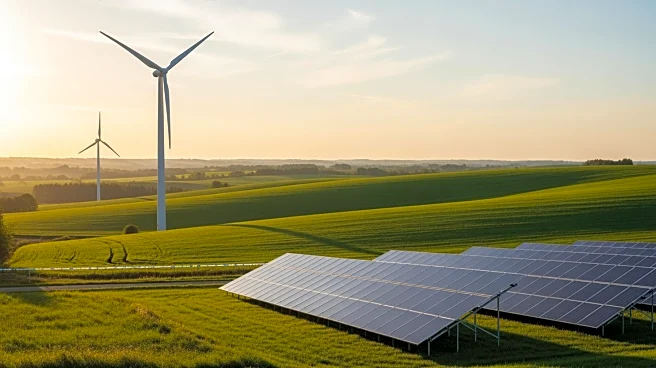
like EDP Renewables North America (EDPR NA). The company has developed wind and solar farms in the area, providing substantial financial benefits through leases and tax revenues. These projects have not only funded public works, such as a $2.8 million renovation of the local 4-H fairgrounds, but have also contributed to infrastructure improvements like road repairs and HVAC system upgrades for the county courthouse. Despite some local concerns about the long-term impact on farmland and landscape, the economic advantages have been widely acknowledged.
Why It's Important?
The development of renewable energy projects in rural areas like Randolph County highlights the potential for economic revitalization through sustainable energy investments. These projects provide a stable income for landowners and generate significant tax revenues that can be reinvested into community infrastructure and services. This model of economic development is particularly important for rural areas that have faced economic challenges due to declining agricultural and manufacturing sectors. The success in Randolph County could serve as a blueprint for other rural communities looking to harness renewable energy for economic growth, potentially leading to broader acceptance and implementation of such projects across the nation.
What's Next?
As renewable energy projects continue to expand, there may be increased discussions and planning around the optimal placement and scale of these developments to balance economic benefits with environmental and community concerns. Stakeholders, including local governments, residents, and renewable energy companies, will likely engage in ongoing dialogue to address issues such as land use and the preservation of agricultural heritage. Additionally, as regulatory frameworks evolve, there may be opportunities for further investment and innovation in renewable energy technologies, potentially leading to even greater economic and environmental benefits for rural communities.
Beyond the Headlines
The shift towards renewable energy in rural areas also raises questions about the long-term cultural and environmental impacts. While the economic benefits are clear, the transformation of landscapes and the use of farmland for energy production may alter traditional rural lifestyles and land use patterns. This transition could lead to a reevaluation of rural identity and heritage, as communities adapt to new economic realities. Furthermore, the success of these projects may influence national energy policies and encourage further investment in renewable energy infrastructure, contributing to broader efforts to combat climate change.