



What's Happening?
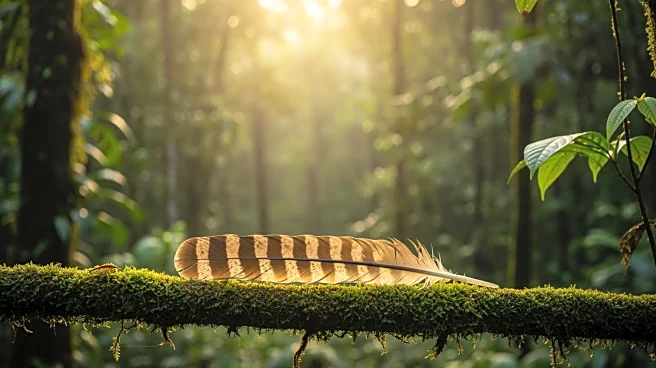
The Samoa Conservation Society (SCS) has reported multiple sightings of the critically endangered manumea, a close relative of the dodo, in Samoa. The sightings occurred during a field survey conducted from October 17 to November 13, marking a significant
increase from previous surveys that yielded few or no sightings. The manumea, scientifically known as Didunculus strigirostris, is native to Samoa and has been threatened by habitat destruction, hunting, and invasive species. The population, once estimated at 7,000 in the early 1990s, has dwindled to between 50 and 150 individuals as of 2024. Efforts to save the species include outlawing hunting and implementing fines, as well as focusing on controlling invasive species such as feral cats and rats, which pose significant threats to the manumea's survival.
Why It's Important?
The discovery of multiple manumea sightings is crucial for conservation efforts aimed at preventing the extinction of this unique species. The manumea is the only living species of its genus, Didunculus, and its extinction would mean the loss of a significant part of Samoa's natural heritage. The presence of invasive species, particularly feral cats and rats, continues to threaten the manumea's survival, highlighting the need for effective management and control programs. Conservationists are exploring biobanking and genetic studies to better understand the species and develop strategies for captive breeding and repopulation. The involvement of organizations such as the Toledo Zoo and Colossal Biosciences underscores the collaborative efforts required to save the manumea.
What's Next?
Future conservation efforts will focus on expanding invasive species management programs to additional forests in Samoa, contingent on funding availability. The SCS aims to secure biological samples for genetic studies, which could inform potential captive breeding programs. The development of an app to distinguish the manumea's call from other birds is underway, which may provide more accurate population estimates. Long-term strategies will include habitat restoration, predator control, and translocation to ensure the survival of the manumea. The success of these initiatives will depend on continued support from international conservation organizations and local government agencies.
Beyond the Headlines
The broader implications of the manumea's conservation efforts extend to the ethical considerations of de-extinction technologies. While organizations like Colossal Biosciences explore gene editing to bring back extinct species, experts caution against reintroducing species into ecosystems that have evolved since their disappearance. Ensuring genetic diversity is crucial for the survival of reintroduced species, emphasizing the importance of the 500-rule in conservation. The manumea's plight highlights the need for comprehensive approaches to conservation that address both immediate threats and long-term ecological impacts.