

What's Happening?
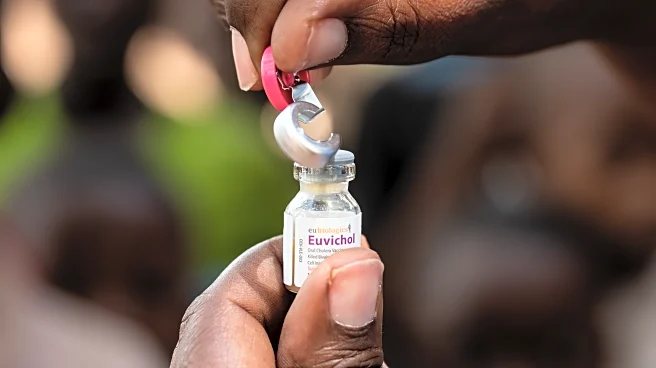
The World Health Organization (WHO), in collaboration with GAVI and UNICEF, has announced the resumption of preventive cholera vaccination programs globally. This comes after a nearly four-year suspension caused by a shortage of vaccines. The global stockpile
of oral cholera vaccines had dwindled to 35 million doses due to increased demand, forcing the organizations to prioritize reactive vaccination campaigns over preventive ones. However, the stockpile has now been replenished to nearly 70 million doses, allowing for the resumption of preventive efforts. The first allocation of 20 million doses is being distributed, with significant portions going to Mozambique, Congo, and Bangladesh. The decision to restart these programs is aimed at breaking the cycle of merely reacting to outbreaks and instead focusing on prevention.
Why It's Important?
The resumption of preventive cholera vaccinations is crucial in addressing the global health challenge posed by cholera, a disease that has seen a resurgence due to factors like poverty, conflict, and climate change. The ability to conduct preventive campaigns rather than just reactive ones could significantly reduce the incidence of cholera outbreaks, which are often exacerbated by environmental and socio-economic conditions. This move is particularly important for countries like Mozambique, which recently experienced severe flooding, increasing the risk of cholera. By stabilizing vaccine supplies, WHO and its partners aim to mitigate the impact of cholera, potentially saving thousands of lives and reducing the burden on healthcare systems in vulnerable regions.
What's Next?
With the resumption of preventive vaccination campaigns, WHO will continue to monitor the global cholera situation closely. The organization plans to maintain a one-dose vaccination strategy as the standard, with two-dose campaigns considered on a case-by-case basis. This approach aims to maximize the reach of available vaccines while ensuring effective protection against the disease. As the global stockpile stabilizes, WHO and its partners will likely expand their efforts to include more countries and regions at risk. The success of these campaigns will depend on continued international cooperation and support to ensure that vaccine supplies remain sufficient to meet global needs.