





What's Happening?
The United States Air Force (USAF) is investigating the feasibility of returning four mothballed KC-10 Extender tanker aircraft to active service for a North African partner nation. This initiative is outlined in a Request for Information (RFI) issued
by the Air Force Life Cycle Management Centre on October 7. The RFI is solely for information and planning purposes, aiming to identify potential industry sources capable of regenerating, providing one-time flight clearance, conducting depot-level return to service, and facilitating worldwide ferry delivery for these aircraft. Additionally, the selected sources would be responsible for in-country Contractor Logistics Support (CLS) and operational/maintenance training. Responses to the RFI are due by October 28, 2026. The KC-10 Extender, derived from the McDonnell Douglas DC-10 commercial airliner, entered USAF service in 1981. The USAF began retiring the KC-10 fleet in mid-July 2020, with the final aircraft departing for the 309th Aerospace Maintenance and Regeneration Group (AMARG) in September 2024, in favor of the newer KC-46 Pegasus.
Why It's Important?
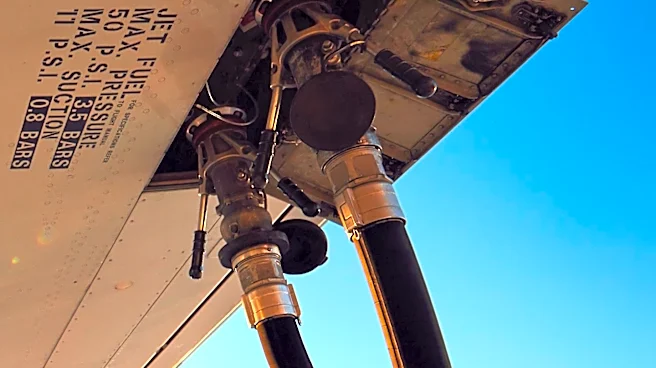
This exploration by the USAF highlights a strategic move to bolster the aerial refueling capabilities of key North African allies, likely Egypt or Morocco, both of whom operate significant F-16 fleets that utilize a boom receptacle for refueling. Providing these nations with KC-10 tankers would enhance their air power projection and operational reach, contributing to regional stability and counter-terrorism efforts. The KC-10's dual refueling system (flying boom and hose-and-drogue) offers versatility, allowing it to support various aircraft types during a single mission. Furthermore, its capacity to transport up to 75 personnel and nearly 76,560 kilograms of cargo over 7,040 kilometers unrefueled adds a crucial logistical dimension. This initiative also presents a significant business opportunity for defense contractors capable of undertaking the extensive regeneration and support services required to bring these retired aircraft back into operational status, potentially creating jobs and stimulating the defense industry.
What's Next?
The immediate next step involves the USAF evaluating the responses to its Request for Information, due by October 28, 2026. This market research will determine the availability of industry sources with the necessary capabilities and expertise to undertake the complex task of reactivating and supporting the KC-10 tankers. Following this assessment, the USAF may issue a formal Request for Proposal (RFP) if suitable sources are identified. If the program proceeds, the selected contractor would then begin the regeneration process, which includes extensive maintenance, flight clearance, and delivery of the aircraft to the partner nation. Concurrently, training programs for the recipient nation's personnel on the operation and maintenance of the KC-10s would be established. The successful implementation of this plan would see the North African partner nation significantly enhance its aerial refueling and transport capabilities, potentially impacting regional military dynamics and cooperation with the U.S.
Beyond the Headlines
The potential transfer of KC-10 tankers to a North African partner nation carries broader implications beyond immediate military capability. It underscores the evolving nature of U.S. foreign policy and defense strategy, emphasizing partnerships and the strengthening of allied forces through the provision of excess defense articles. This move could deepen military-to-military ties, fostering greater interoperability and intelligence sharing between the U.S. and the recipient nation. Ethically, the transfer of military assets requires careful consideration of regional stability, human rights, and the potential for escalation of conflicts. The long-term shift could see a more distributed global security architecture, where allies are empowered with advanced capabilities, potentially reducing the direct intervention burden on the U.S. while maintaining its strategic influence. Economically, it represents a lifecycle extension for valuable military assets, offering a cost-effective way to enhance allied capabilities compared to procuring new aircraft.