







What's Happening?
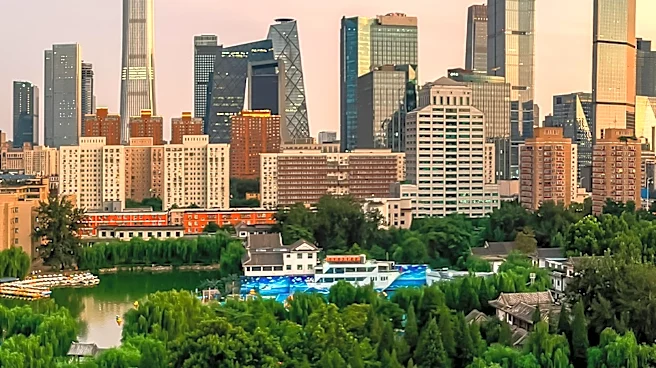
The Summer Palace in Beijing, China, is an imperial garden centered around Kunming Lake and Longevity Hill, spanning approximately 3 square kilometers. It features palace courtyards, lakeside paths, hills, and bridges, with various separately ticketed
attractions. Key landmarks include the Long Corridor, the Tower of Buddhist Incense, the Marble Boat, and the Seventeen-Arch Bridge. The palace offers diverse routes for visitors, ranging from easy two-hour walks focusing on flatter areas to more extensive half-day itineraries that include climbing Longevity Hill and exploring secondary areas like Suzhou Street. The site was originally developed between 1750 and 1764, suffered damage in 1860 and 1900, and was subsequently reconstructed and renamed, becoming a UNESCO World Heritage site in 1998.
Why It's Important?
The Summer Palace serves as a significant cultural and historical landmark, offering insights into China's imperial past and traditional garden design. Its preservation and accessibility provide a valuable educational experience for both domestic and international tourists, contributing to the understanding of Chinese heritage. The site's dual role as a historical relic and a public park underscores the importance of cultural heritage conservation and its integration into modern urban life. For the tourism sector, the Summer Palace remains a major attraction, drawing visitors who contribute to the local economy through entrance fees, transportation, and related services. Its detailed guide for visitors, including route suggestions and seasonal tips, enhances the visitor experience and promotes responsible tourism.
What's Next?
Visitors planning a trip to the Summer Palace should consider the time of year, as spring and autumn offer comfortable conditions, while summer can be hot and humid, and winter brings fewer visitors. Planning the entrance and exit points is crucial due to the park's size, and visitors should be aware of the physical demands, especially if climbing Longevity Hill. Tickets can be purchased at service windows or via the official WeChat account, with international visitors requiring a passport for online booking. Separately ticketed attractions have different operating hours and may close on Mondays. Continued efforts will likely focus on maintaining the site's historical integrity, managing visitor flow, and enhancing accessibility while preserving its natural and architectural beauty.
Beyond the Headlines
Beyond its immediate appeal as a tourist destination, the Summer Palace embodies a complex history of imperial power, artistic expression, and resilience through periods of destruction and reconstruction. Its design, integrating natural landscapes with intricate architecture, reflects traditional Chinese philosophies of harmony between humanity and nature. The site's designation as a UNESCO World Heritage site highlights its universal value and the global recognition of its cultural significance. The ongoing management of such a vast and historically rich site involves balancing conservation efforts with public access, ensuring that future generations can continue to appreciate its legacy while adapting to modern tourism demands and environmental considerations.