









What's Happening?
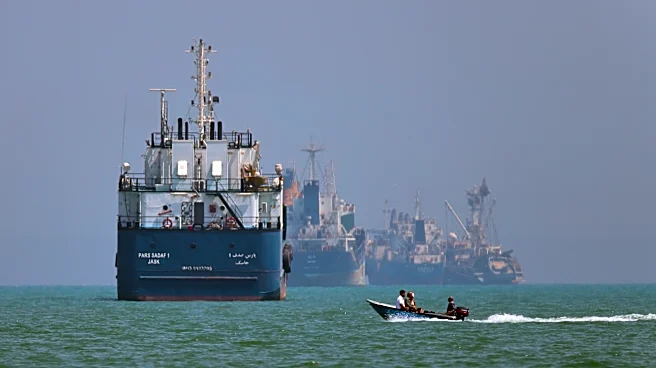
Oil prices have surged above $91 per barrel as President Trump announced potential new U.S. military strikes against Iran. This development comes amid heightened tensions in the Strait of Hormuz, a vital passage for global oil transport. Despite the tensions,
crude futures have decreased by over 25% since their peak in April, aided by reduced Chinese imports and the release of emergency reserves. President Trump stated that over 200 commercial ships and 100 million barrels of oil have navigated the strait under a 'secret mission' to support maritime commerce. The U.S. military actions and Iran's response have escalated concerns about the stability of oil supply routes.
Why It's Important?
The situation underscores the volatility in global oil markets, with potential impacts on U.S. energy prices and economic stability. The Strait of Hormuz is a critical chokepoint for oil shipments, and any disruption could lead to significant price increases, affecting consumers and industries reliant on oil. The U.S. military's involvement highlights the geopolitical stakes, as any escalation could further strain international relations and impact global trade. The ongoing conflict and President Trump's aggressive stance may deter diplomatic resolutions, prolonging market instability.
What's Next?
The potential for further military action by the U.S. could lead to increased volatility in oil prices. Stakeholders, including global oil companies and governments, will likely monitor the situation closely, preparing for possible supply disruptions. Diplomatic efforts may be necessary to de-escalate tensions and ensure the safe passage of oil shipments through the Strait of Hormuz. The international community may call for negotiations to prevent further conflict and stabilize the region.