
What's Happening?
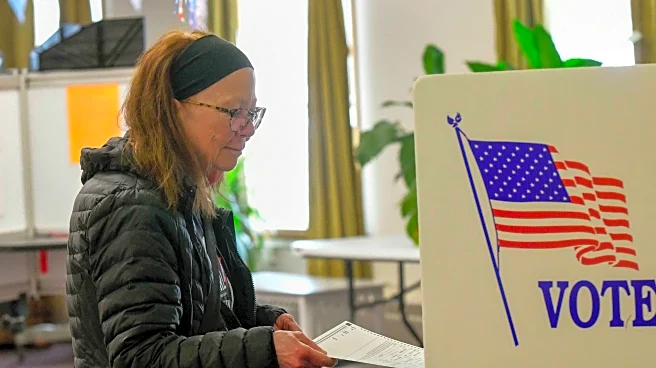
The Florida Legislature has passed a bill requiring proof of U.S. citizenship for voter registration, aligning with federal legislation supported by President Trump and Republicans. The bill, known as HB 991, mandates that voters provide documentation
such as a REAL ID-compliant driver's license, U.S. birth certificate, or passport to verify citizenship. Additionally, the bill removes student IDs from the list of acceptable identification at polling stations. The measure passed the GOP-controlled Florida House with a 77-28 vote and the Senate with a 27-12 vote, mostly along party lines. The bill is expected to be signed into law by Governor Ron DeSantis but will not take effect until January 2027. Proponents argue the bill enhances voter integrity, while critics claim it could disenfranchise eligible voters who lack the required documentation.
Why It's Important?
This legislation is significant as it reflects ongoing national debates over voter ID laws and election integrity. Supporters argue that the bill will prevent voter fraud and ensure that only eligible citizens participate in elections. However, opponents warn that it could disenfranchise voters, particularly those who may not have easy access to the required documents, such as students and older adults. The removal of student IDs as valid identification could particularly impact young voters, potentially reducing their participation in elections. The bill's passage in Florida, a key swing state, could influence similar legislative efforts in other states and shape the broader national discourse on voting rights and election security.
What's Next?
The bill now awaits the signature of Governor Ron DeSantis, who is expected to approve it. Once signed, the law will take effect in January 2027, after the upcoming midterm elections. This delay provides time for potential legal challenges and adjustments in election administration. Voting rights groups and civil liberties organizations may pursue legal action, arguing that the law could violate constitutional voting rights. Additionally, the implementation of the law will require coordination with the Florida Department of Highway Safety and Motor Vehicles to verify voter citizenship, which could present logistical challenges.