





What's Happening?
Eco Wave Power U.S. Inc., a subsidiary of Eco Wave Power Global AB, has entered into an agreement with Germany-based AI engineering GmbH to develop a physics- and data-driven Digital Twin platform for its proprietary wave energy technology. This collaboration
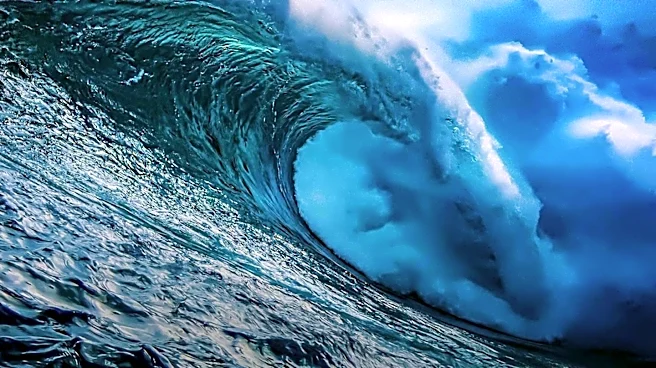
aims to integrate artificial intelligence, physics-based simulation, machine learning, and Digital Twin technology into the design, monitoring, and optimization of Eco Wave Power's wave energy systems. Both companies are members of the NVIDIA Inception program, leveraging NVIDIA technologies like Omniverse for visualization and simulation workflows, and Warp for the project's modeling toolchain. Phase 1 of the project, titled 'Eco Wave Power - Digital Twin & Energy-Aware Computing,' will focus on digitally modeling ocean wave interactions with Eco Wave Power's floaters, evaluating behavior, structural loads, and theoretical energy input under various sea conditions using AI engineering's PAMICS simulation technology. The goal is to compare simulated results with real-world sensor measurements and develop machine-learning capabilities for forecasting energy yield and system loads, with a key objective of adapting the Digital Twin for different project locations.
Why It's Important?
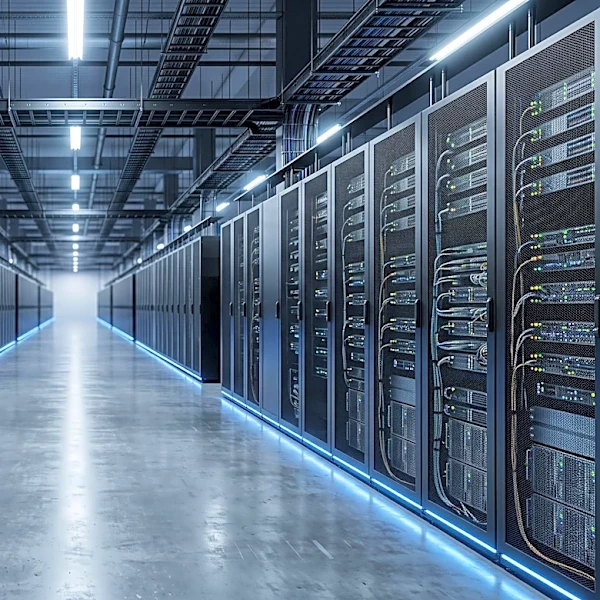
This partnership is significant for the U.S. renewable energy sector and the broader application of AI in sustainable technologies. By integrating advanced AI and Digital Twin technology, Eco Wave Power aims to make wave energy more intelligent, predictive, and scalable, positioning it as a potential renewable energy source for the rapidly growing electricity demands of AI, data centers, and digital infrastructure. This initiative could accelerate the development and deployment of wave energy projects in the U.S., contributing to energy independence and climate goals. The ability to accurately model and predict system performance across diverse ocean conditions will reduce risks and costs associated with wave energy deployment, making it a more viable option for coastal communities and industries. Furthermore, the collaboration highlights the increasing convergence of AI and clean energy, demonstrating how advanced computing can optimize complex renewable energy systems and address the energy consumption challenges posed by the AI boom.
What's Next?
The immediate next step is the completion of Phase 1 of the 'Eco Wave Power - Digital Twin & Energy-Aware Computing' project, which will involve detailed digital modeling and simulation of wave-floater interactions. Following this, the companies plan to compare these simulations with real-world data from Eco Wave Power's existing projects, such as the one at Jaffa Port in Israel and the pilot at the Port of Los Angeles. The development of machine-learning capabilities for forecasting energy yield and system loads will be crucial for optimizing future deployments. A key focus will be on determining how the Digital Twin can be adapted to new sites with varying wave conditions, which will be essential for global scalability. This will likely involve continuous refinement of the Digital Twin platform, incorporating more real-world data and advanced AI algorithms to improve accuracy and predictive power. The long-term vision is to use this digital intelligence to support faster engineering optimization, improved forecasting, and more efficient deployment of wave energy technology across different geographic markets, including planned projects in Portugal, Taiwan, and India.
Beyond the Headlines
This collaboration represents a deeper trend towards the 'digitalization' of physical infrastructure, particularly in the renewable energy sector. The use of Digital Twins and AI in wave energy not only optimizes performance but also creates a feedback loop between the physical and digital worlds, enabling continuous learning and improvement. This approach could set a precedent for other complex renewable energy technologies, such as offshore wind or geothermal, by providing a framework for predictive maintenance, operational efficiency, and risk mitigation. Ethically, by making wave energy more reliable and cost-effective, this initiative contributes to a more sustainable future, addressing the environmental impact of traditional energy sources and the increasing energy demands of the digital age. Culturally, it signifies a shift towards viewing energy infrastructure not just as physical assets but as intelligent, data-driven systems, fostering a new generation of engineers and scientists skilled in both renewable energy and advanced AI. This convergence could ultimately lead to a more resilient and interconnected global energy grid.