










What's Happening?
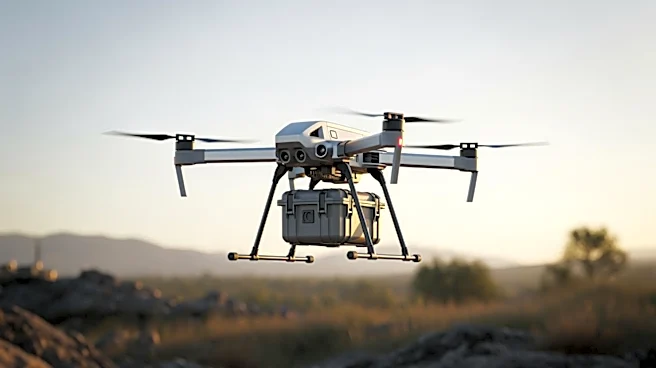
Ukraine is adapting its reconnaissance and attack drones to transport essential supplies such as water, ammunition, and medicine to soldiers on the front lines. This shift is driven by the increasing danger of sending human soldiers on these supply missions
due to the high risk of exposure to enemy surveillance and attack drones. Companies like Frontline Robotics are at the forefront of this innovation, with their Linza drone now being used by over 60 Ukrainian units for logistics purposes. The Linza drone, originally designed for attack operations, has been upgraded to carry heavier loads over longer distances, enhancing its utility in supplying troops in exposed areas. This strategic move aims to minimize human presence in high-risk zones, thereby reducing casualties and maintaining operational efficiency.
Why It's Important?
The repurposing of drones for logistics in Ukraine highlights a significant shift in military strategy, emphasizing the protection of human life by leveraging technology. This development could influence military tactics globally, as other nations may adopt similar strategies to safeguard their personnel. The use of drones for logistics not only enhances the safety of soldiers but also ensures a steady supply of critical resources to the front lines, which is vital for sustaining military operations. This approach could lead to a broader acceptance and integration of unmanned systems in various military applications, potentially transforming how wars are fought and logistics are managed.
What's Next?
As Ukraine continues to innovate in drone technology, the focus will likely remain on enhancing the autonomy and capabilities of these systems. The goal is to achieve a scenario where unmanned systems can handle frontline logistics entirely, reducing the need for human intervention. This could involve further advancements in drone technology, such as increased payload capacity, extended range, and improved navigation systems. Additionally, the development of drones capable of engaging in combat autonomously could become a reality, further shifting the dynamics of modern warfare. The international community will be watching closely, as these advancements could set new precedents in military technology and strategy.
Beyond the Headlines
The ethical implications of using autonomous drones in warfare are significant. As technology advances, the potential for fully autonomous combat systems raises questions about accountability and the rules of engagement. The shift towards machine-driven warfare could lead to debates on the moral responsibilities of deploying such technologies and the potential consequences of reducing human oversight in combat scenarios. Furthermore, the increased reliance on technology in military operations may spur discussions on cybersecurity and the risks associated with hacking or technological failures in critical systems.