






What's Happening?
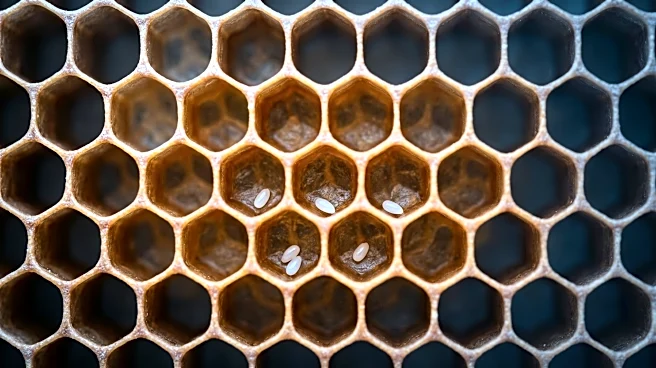
Researchers at the University of California, Davis, have uncovered a previously unknown survival mechanism in honeybee queens: they can transfer accumulated pesticides into their eggs. This process, termed maternal offloading, allows the queen to reduce
her own chemical burden. The study, published in Current Biology, indicates that while worker bees typically filter harmful substances, their capacity can be overwhelmed, leading to pesticide accumulation in queens. The research involved creating 'nanocolonies' where queens and worker bees were exposed to methyl parathion, a pesticide tagged with a radioactive marker. Scientists tracked the pesticide's movement and found that while worker bees initially filtered out a significant portion, the queen began offloading the chemicals into her eggs over time. This finding suggests a complex interplay between individual bee survival and colony-wide health in the face of environmental contaminants.
Why It's Important?
This discovery has significant implications for beekeeping, agricultural practices, and integrated pest management strategies in the U.S. Honeybees are crucial for pollinating approximately one-third of the world's food crops, making colony health a vital concern for agricultural productivity and food security. The ability of queen bees to offload pesticides into their eggs suggests that even if a queen appears healthy, her offspring and the future of the colony could be at risk. This 'slow creeping effect of chemical accumulation' could contribute to delayed colony collapse, impacting the agricultural sector that relies heavily on bee pollination. Understanding this mechanism is critical for developing more effective strategies to protect bee populations, which are already under threat from various factors, including pesticide exposure, habitat loss, and disease. The findings highlight the need for a more comprehensive approach to pesticide regulation and application, considering the long-term effects on entire bee colonies rather than just individual worker bees.
What's Next?
Future research will focus on understanding the long-term consequences of maternal offloading for bee colonies, including how long queens can continue this process and whether the effects vary depending on the type of pesticide. Researchers also aim to investigate the impact on the developing offspring and the overall health and viability of the colony. This ongoing research will be crucial for informing beekeepers, growers, and policymakers about the hidden dangers of pesticide exposure and for developing more sustainable pest management practices. The study was supported by the USDA's National Institute of Food and Agriculture and the PAm-Costco USA Scholarship program, indicating continued interest and funding for this critical area of research. The collaboration with Lawrence Livermore National Laboratory and the USDA-ARS also suggests a multi-disciplinary approach to addressing these complex environmental challenges.
Beyond the Headlines
The phenomenon of maternal offloading in queen bees raises broader ethical and ecological questions about the pervasive impact of human activities on natural ecosystems. It highlights how organisms can develop unexpected coping mechanisms to environmental stressors, but often at a cost to future generations. This 'hidden defense' mechanism underscores the complexity of ecological systems and the potential for unforeseen consequences when introducing chemicals into the environment. The long-term health of bee populations is not just an agricultural concern but a fundamental indicator of ecosystem health. The study also points to the limitations of current toxicology research, which has largely focused on worker bees, emphasizing the need for more holistic approaches that consider the entire life cycle and social structure of species. This research could prompt a re-evaluation of how pesticide safety is assessed, moving towards models that account for intergenerational effects and the resilience mechanisms of key species.