





What's Happening?
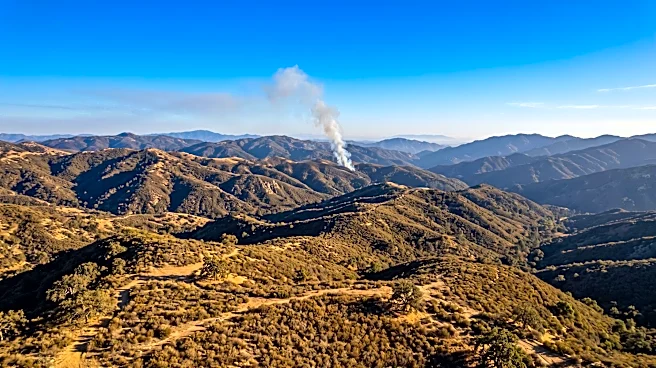
Students at Northwest Nazarene University (NNU) are collaborating with the U.S. Forest Service, utilizing artificial intelligence (AI) and LiDAR technology to enhance wildfire preparedness. This research aims to help the Forest Service understand how
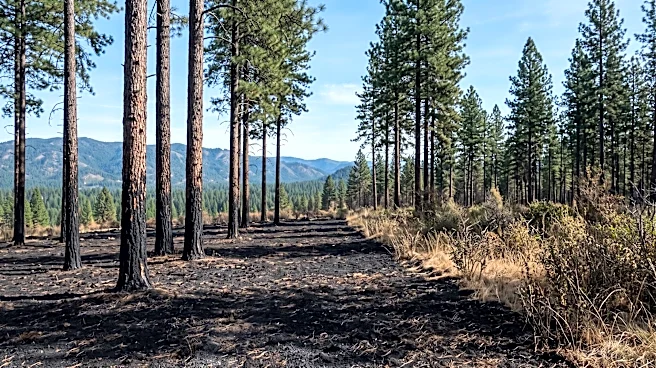
wildfires might spread through forests and to assess the effectiveness of prescribed burns in reducing fuel loads. The Forest Service has awarded NNU an additional $122,000 to expand this ongoing work, with their agreement extending through 2031. Dale Hamilton, chair of NNU’s Computer Science Department, stated that this research assists forest managers in determining optimal treatment strategies for areas before wildfires occur, which could include thinning trees, conducting prescribed burns, or a combination of both approaches. Hamilton noted that their work provides confidence that prescribed burns can help keep fires as surface fires, even on high-risk days.
Why It's Important?
This collaboration is crucial for improving wildfire management strategies in the U.S., particularly in regions prone to large and destructive fires. By leveraging AI and LiDAR, NNU students are providing the Forest Service with advanced tools to predict fire behavior more accurately and to evaluate the impact of preventative measures like prescribed burns. This scientific approach can lead to more effective and data-driven decisions in forest management, potentially saving lives, property, and natural resources. The long-term agreement through 2031 signifies a sustained commitment to this innovative research, ensuring continuous development and application of these technologies. This initiative also highlights the growing role of academic institutions in addressing critical environmental challenges through technological innovation and interdisciplinary collaboration.
What's Next?
The expanded funding and extended agreement through 2031 will allow NNU students and faculty to continue and deepen their research into AI and LiDAR applications for wildfire preparedness. This ongoing work will likely lead to more sophisticated models for predicting fire spread and assessing fuel reduction strategies. The U.S. Forest Service will integrate these findings and tools into their operational planning, potentially refining their prescribed burn programs and forest thinning efforts. The success of this collaboration could also inspire similar partnerships between academic institutions and government agencies in other regions, fostering a broader adoption of advanced technologies in environmental management. Further research may explore real-time fire monitoring and adaptive management strategies based on AI-driven insights.
Beyond the Headlines
The application of AI and LiDAR in wildfire management represents a significant leap in environmental conservation and disaster preparedness. Beyond the immediate benefits of fire prevention, this technology can contribute to a deeper understanding of forest ecosystems, climate change impacts, and sustainable land management practices. The ethical implications of using AI in environmental decision-making, such as ensuring data accuracy and avoiding biases in models, will become increasingly important. Culturally, this collaboration showcases the power of interdisciplinary approaches, combining computer science with ecological knowledge to tackle complex problems. It also underscores the importance of investing in scientific research and technological innovation as essential components of national resilience against natural disasters, potentially influencing public policy on funding for environmental science and technology education.