
What's Happening?
Researchers at the University of Bonn have developed a new filter inspired by the gill arch system in fish, designed to remove over 99% of microplastics from washing machine wastewater. This innovation
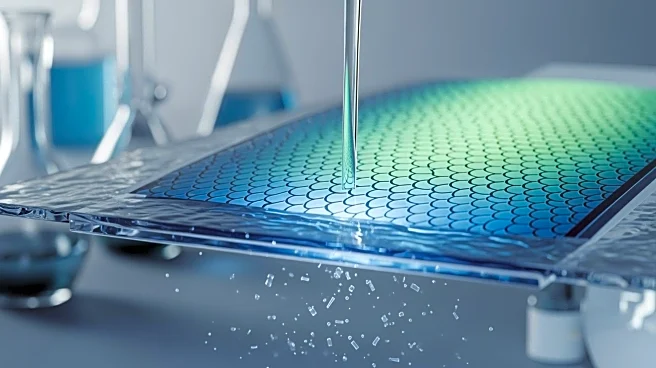
addresses the significant environmental issue of microplastic pollution, which is largely generated by fibers wearing off textiles during washing. The filter mimics the natural filtration system of fish, using a funnel-shaped design with comb-like structures to capture microplastics effectively. The device has been tested successfully, showing high efficiency in removing plastic fibers without becoming clogged, a common problem with existing filters. The research team has applied for patents in Germany and the EU, hoping manufacturers will integrate this technology into future washing machines to mitigate the spread of microplastics.
Why It's Important?
Microplastic pollution is a growing environmental concern, with potential health risks as these particles have been found in human breast milk, placentas, and even the brain. The development of an effective filter for washing machines could significantly reduce the amount of microplastics entering the environment, particularly through sewage sludge used as fertilizer. This innovation represents a crucial step in addressing the pollution problem at its source, potentially leading to healthier ecosystems and reduced human exposure to harmful microplastics. The filter's design, inspired by natural systems, offers a sustainable solution that could be widely adopted, reducing the environmental footprint of everyday laundry activities.
What's Next?
The University of Bonn and its partners are working on securing patents and collaborating with manufacturers to refine and implement the filter technology in commercial washing machines. This could lead to widespread adoption, significantly reducing microplastic pollution from household laundry. The research team is also exploring further applications of the technology, potentially expanding its use to other areas of wastewater treatment. As awareness of microplastic pollution grows, there may be increased pressure on manufacturers to incorporate such sustainable technologies, driving innovation and environmental responsibility in the industry.