

What's Happening?
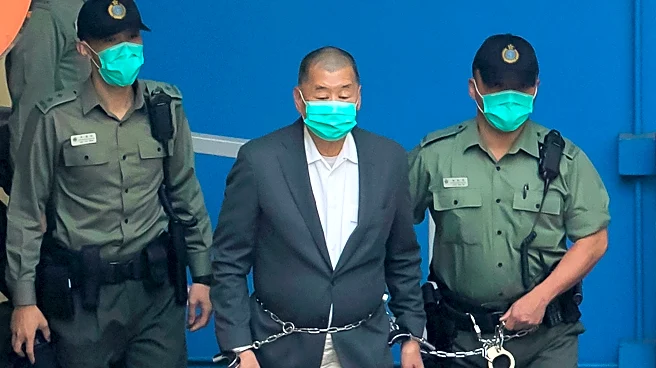
Jimmy Lai, a former pro-democracy media mogul in Hong Kong, has been convicted in a landmark national security trial. The court found Lai guilty of conspiring with foreign forces to endanger national security and conspiracy to publish seditious articles.
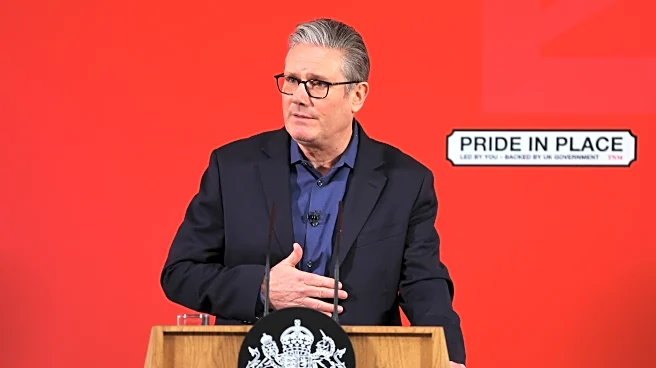
Lai, who is 78 years old, was arrested in August 2020 under a national security law imposed by Beijing following large-scale protests in 2019. The trial, which was conducted without a jury, has been closely watched by international observers as a measure of media freedom and judicial independence in Hong Kong. Lai's conviction could result in a life sentence, with a mitigation hearing scheduled for January 12 to argue for a reduced sentence. The case has drawn attention from global leaders, including U.S. President Trump and U.K. Prime Minister Keir Starmer, who have both expressed concerns over Lai's imprisonment.
Why It's Important?
The conviction of Jimmy Lai is significant as it highlights the ongoing tensions between Hong Kong's pro-democracy movement and Beijing's tightening grip on the region. Lai's case is seen as a critical test of Hong Kong's judicial independence and media freedom, which have been under scrutiny since the implementation of the national security law. The trial's outcome could have far-reaching implications for other activists and media figures in Hong Kong, potentially leading to increased self-censorship and a chilling effect on free speech. Internationally, the case could strain diplomatic relations between China and Western countries, particularly the U.S. and the U.K., who have been vocal in their support for Lai and other pro-democracy activists.
What's Next?
Following the conviction, a four-day mitigation hearing is set to begin on January 12, where Lai's legal team will argue for a shorter sentence. The international community, including human rights organizations and foreign governments, is likely to continue monitoring the situation closely. There may be increased diplomatic pressure on China to address concerns over human rights and judicial independence in Hong Kong. Additionally, the verdict could prompt further discussions and actions within the U.S. and U.K. governments regarding their policies towards China and support for Hong Kong's pro-democracy movement.
Beyond the Headlines
Lai's conviction underscores the broader implications of the national security law on Hong Kong's civil liberties and autonomy. The trial has raised concerns about the erosion of the 'one country, two systems' framework that was supposed to guarantee certain freedoms for Hong Kong after its return to Chinese rule in 1997. The case also highlights the challenges faced by media organizations in Hong Kong, as they navigate an increasingly restrictive environment. The closure of Lai's Apple Daily newspaper in 2021, following police raids and asset freezes, exemplifies the pressures on independent journalism in the region.