





What's Happening?
U.S. Senators Roger Marshall (R-Kansas) and John Barrasso (R-Wyoming), along with other Senate colleagues, have urged the U.S. Department of Agriculture (USDA) and the U.S. Department of the Interior to expand grazing access for livestock producers and enhance
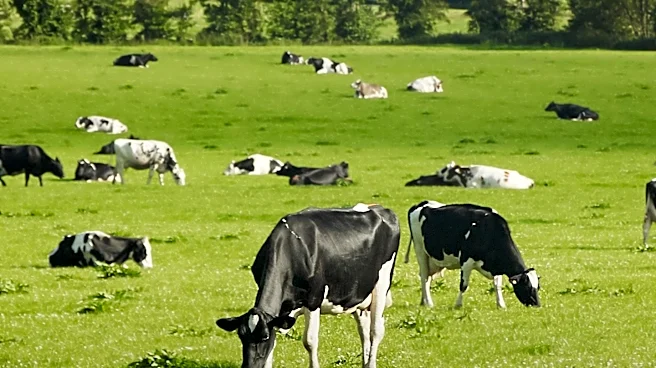
risk management tools. This call comes as the American cattle herd has reached its lowest level in approximately 75 years. The Senators emphasized the importance of the U.S. beef industry, which accounts for nearly a quarter of U.S. agriculture receipts, and stressed the need for federal agencies to collaborate with the industry to expand grazing on public and private lands and improve protein processing capacity. They specifically requested the finalization of the Bureau of Land Management’s grazing rule, a reevaluation of federal programs that restrict grazing capacity, and the strengthening of livestock risk management tools. Senator Marshall has also been active in introducing legislation such as the Emerging Tick-Borne Livestock Disease Research Prioritization Act and the Beef Labeling Clarity Act to support cattle producers and ensure transparency for consumers.
Why It's Important?
The current decline in the U.S. cattle herd to a 75-year low poses significant economic implications for the American agricultural sector and consumers. A smaller herd can lead to reduced beef supply, potentially driving up prices for consumers and impacting the profitability of ranchers. The senators' push for expanded grazing access and improved risk management tools is crucial for providing producers with the stability and resources needed to rebuild the herd. Enhanced risk management can protect cattle producers from market volatility, disease outbreaks, and environmental challenges, ensuring the long-term viability of their operations. Furthermore, initiatives like transparent beef labeling aim to empower consumers with information about the origin of their beef and help American producers differentiate their products, fostering fair competition and supporting domestic agriculture. The focus on livestock disease research, particularly tick-borne diseases, is vital for safeguarding animal health and preventing economic losses for ranchers.
What's Next?
The U.S. Department of Agriculture and the U.S. Department of the Interior are expected to review the letter from Senators Marshall and Barrasso and their colleagues. This could lead to further action on finalizing the Bureau of Land Management’s grazing rule and reevaluating federal programs that impact grazing capacity. The USDA may also consider strengthening existing livestock risk management tools. Additionally, the legislative efforts led by Senator Marshall, such as the Emerging Tick-Borne Livestock Disease Research Prioritization Act and the Beef Labeling Clarity Act, will proceed through the legislative process, potentially leading to new policies that support cattle producers and enhance consumer transparency. Continued advocacy from congressional members and industry stakeholders will likely influence the pace and scope of these changes, as the industry works to address the historic low in cattle herd numbers.
Beyond the Headlines
The current state of the U.S. cattle herd highlights broader challenges within the agricultural sector, including the delicate balance between land use, environmental conservation, and food production. The debate over grazing access on public lands often involves complex environmental considerations and stakeholder interests. Furthermore, the emphasis on transparent beef labeling reflects a growing consumer demand for information about food origins and production practices, which can influence market dynamics and trade relationships. The long-term implications of a shrinking cattle herd could extend beyond immediate economic impacts, potentially affecting rural economies, land management practices, and the overall resilience of the U.S. food supply chain. Addressing these issues requires a comprehensive approach that considers economic viability, environmental sustainability, and consumer preferences.