







What's Happening?
Japan and the United Nations Development Programme (UNDP) have committed $3 million to Kazakhstan to enhance environmental oversight and promote sustainable development within its rare metal and rare earth mineral sector. This new initiative, launched
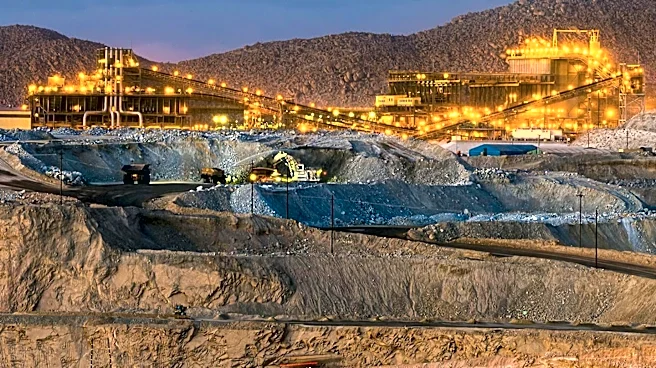
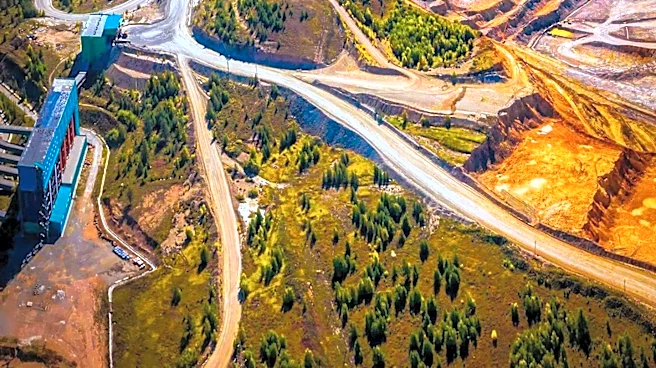
on October 30, will be implemented by UNDP in partnership with Kazakhstan’s Ministry of Industry and Construction, with funding provided by Japan. Kazakhstan has identified over 120 rare-metal and rare-earth deposits nationwide. The project aims to help Kazakhstan develop the analytical, regulatory, and technological foundations necessary for sustainable rare metal and rare earth mineral supply chains. A key focus is on integrating environmental standards and digital monitoring at an early stage to identify and address environmental risks before large-scale industrial development commences. Yasumasa Iijima, Japan’s ambassador to Kazakhstan, stated that this initiative aligns with Japan’s priorities of Green and Resilience and Connectivity, announced at the December 2025 Central Asia-Japan Summit.
Why It's Important?
The growing global demand for critical minerals presents both economic opportunities and significant environmental challenges. This $3 million commitment is crucial for Kazakhstan to ensure that the extraction and processing of its rare metals and rare earths meet stringent environmental standards. By strengthening environmental governance, pollution prevention, and the protection of local communities, the project aims to mitigate the negative ecological impacts often associated with mining. For Kazakhstan, this means developing a more responsible and sustainable mining sector, which can attract further investment and enhance its reputation in global supply chains. For Japan, it reinforces its commitment to sustainable development and resilience in Central Asia, aligning with its strategic priorities. The initiative also highlights the importance of international cooperation in addressing complex environmental issues and promoting responsible resource management in a world increasingly reliant on these critical minerals for advanced technologies.
What's Next?
The initiative will proceed with developing analytical, regulatory, and technological frameworks for sustainable rare metal and rare earth mineral supply chains in Kazakhstan. A primary focus will be on integrating environmental standards and digital monitoring systems early in the development process to proactively identify and address potential environmental risks. This project marks the fifth joint initiative between UNDP and Japan in Kazakhstan, expanding their cooperation into environmental governance and sustainable natural resource management. Future steps will likely involve the implementation of these new standards and monitoring systems, along with capacity building for local institutions and industry stakeholders. The success of this project could serve as a model for other countries with significant mineral resources, demonstrating how economic development can be pursued in an environmentally responsible manner.
Beyond the Headlines
This collaboration between Japan and UNDP in Kazakhstan underscores the increasing global recognition of the environmental footprint of critical mineral extraction. As the world transitions to green technologies, the demand for rare metals and rare earths is soaring, creating pressure on mining regions. This project addresses the ethical and environmental dilemmas inherent in this demand, promoting a 'greener' approach to mining. It also reflects a broader shift towards integrating environmental, social, and governance (ESG) factors into industrial development, particularly in sectors with high environmental impact. The emphasis on early-stage environmental risk identification and digital monitoring represents a proactive strategy to prevent ecological damage rather than merely remediating it. This approach could set new benchmarks for responsible mining practices globally, influencing how nations manage their natural resources in the face of escalating global demand.