




What's Happening?
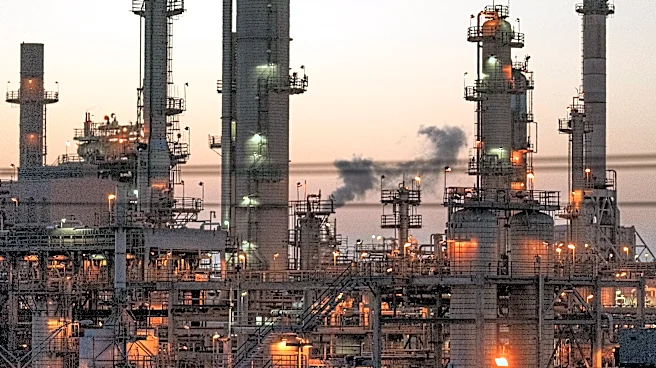
The European Union is making significant progress in developing carbon dioxide storage sites to meet its 2030 emissions target. The EU aims to achieve an annual injection capacity of 50 million tonnes of CO2 by 2030, supporting carbon capture and storage projects.
Currently, three sites—Porthos, Greensand, and Prinos—have permits, with Greensand set to inject its first CO2 next month. The Prinos site is expected to become operational between 2026 and 2027, while Porthos is anticipated to start next year. The European Commission reports that at least seven additional sites will come online in the coming years, contributing to a total injection capacity of 19 million tonnes annually.
Why It's Important?
The development of CO2 storage sites is crucial for reducing industrial emissions and supporting the EU's climate goals. By increasing the availability of storage sites, the EU can facilitate investments in carbon capture technologies across member states. This infrastructure is vital for heavy industries that rely on CO2 storage to mitigate their environmental impact. The initiative aligns with the EU's broader strategy to transition to a low-carbon economy, potentially influencing global climate policies and encouraging other regions to adopt similar measures.
What's Next?
The EU plans to continue expanding its CO2 storage capacity, with more sites expected to become operational in the coming years. This expansion will support ongoing and future carbon capture projects, helping the EU meet its emissions reduction targets. The initiative may prompt further investments in carbon capture technologies and infrastructure, potentially leading to advancements in the field. As the EU progresses towards its 2030 target, it may also influence international climate negotiations and encourage other countries to enhance their carbon storage capabilities.