

What's Happening?
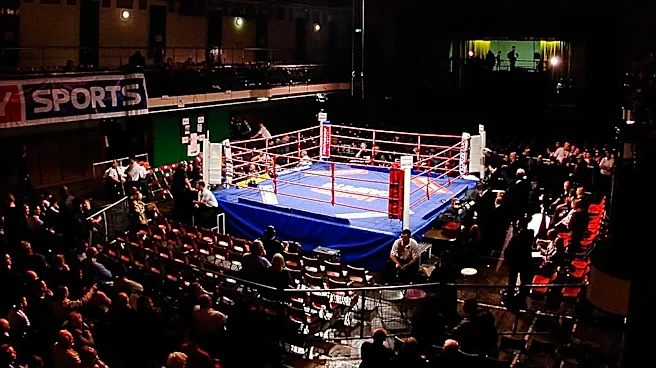
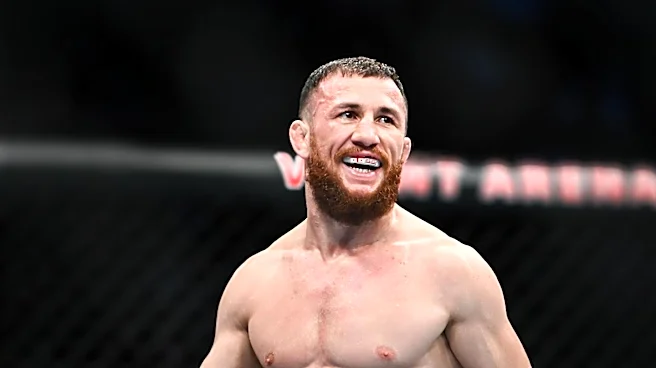
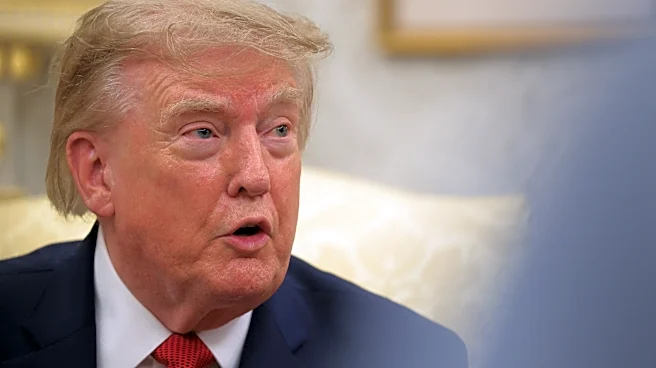
A new book titled 'Fight! Fight! Fight!' by journalist Jonas Cullberg investigates how the Ultimate Fighting Championship (UFC) has become a significant political arena in the United States and played a role in President Trump's return to power. Cullberg's
book suggests that President Trump's frequent appearances at major UFC events are not merely a personal preference for combat sports but are part of a strategic collaboration with UFC President Dana White and the organization's fighters. The book examines how mixed martial arts, once considered a niche subculture, has grown into a sport with a global audience and, in recent years, how the UFC has emerged as a powerful force, particularly within right-wing circles, paving the way for President Trump's political comeback.
Why It's Important?
This analysis is important because it highlights the increasing intersection of sports, entertainment, and U.S. politics, particularly concerning the influence of popular cultural phenomena on political narratives. The book suggests that the UFC has transcended its role as a sports organization to become a platform for political messaging and mobilization, especially for conservative and right-wing demographics. This dynamic can significantly impact public discourse and voter sentiment, as sports figures and events often command broad public attention. The alleged collaboration between President Trump and UFC leadership indicates a strategic effort to leverage popular sports for political gain, potentially influencing future election cycles and the broader political landscape by tapping into a dedicated and passionate fanbase. It also raises questions about the neutrality of sports organizations in political matters.
What's Next?
The publication of 'Fight! Fight! Fight!' is likely to spark further discussion and debate regarding the political influence of sports organizations like the UFC and the role of public figures in endorsing political candidates. It may prompt media scrutiny into the nature of the relationship between President Trump and UFC leadership, potentially leading to more in-depth investigations or interviews with key figures. The book's claims could also influence how political campaigns approach engagement with sports and entertainment industries in the future, seeking to replicate or counter such strategies. Furthermore, it might encourage a re-evaluation of how sports events are perceived—not just as entertainment but as potential venues for political messaging and community building among specific ideological groups.
Beyond the Headlines
The book's exploration of the UFC's growth within 'right-wing circles' and its alleged role in President Trump's political resurgence points to a deeper cultural phenomenon: the politicization of popular entertainment and the fragmentation of media consumption along ideological lines. This trend suggests that traditional political campaigning is evolving, with non-traditional platforms gaining significant influence. It also raises ethical questions about the responsibilities of sports organizations and public figures to maintain political neutrality, or conversely, their right to express political affiliations. The narrative presented by Cullberg could contribute to a broader understanding of how cultural institutions are increasingly becoming battlegrounds for political ideologies, shaping public opinion in ways that extend beyond conventional news and political commentary.