


What's Happening?
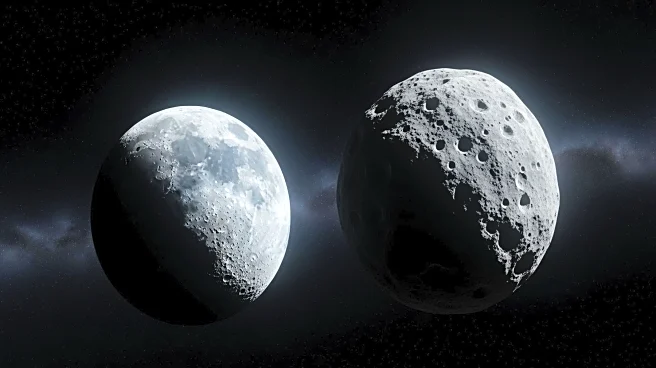
A 60-meter-wide asteroid, designated 2024 YR4, is projected to potentially collide with the Moon in December 2032. The probability of this event occurring is estimated at 4.3%, but it has generated significant interest among planetary scientists. The collision,
if it happens, would be a rare opportunity to observe a large-scale impact on the Moon with modern instruments. The asteroid is expected to travel at speeds of up to 14 kilometers per second, releasing energy equivalent to 6.5 million tons of TNT. This impact could create a crater approximately one kilometer wide and hundreds of meters deep. Such an event would allow scientists to study the Moon's geological history and its response to a powerful impact, providing valuable data on the Moon's subsurface and refining models of its internal structure.
Why It's Important?
The potential collision of asteroid 2024 YR4 with the Moon presents a unique scientific opportunity. Observing such a large impact in real-time could significantly advance our understanding of crater formation and the geological processes of planetary bodies. The event could also trigger seismic waves, or 'moonquakes,' with an intensity equivalent to a magnitude 5 earthquake on Earth, offering insights into the Moon's internal structure. Additionally, the debris from the impact could pose a threat to satellites in Earth's orbit, highlighting the need for monitoring and potentially mitigating space debris. This scenario underscores the importance of planetary defense and the potential need for intervention strategies, such as those demonstrated by NASA's DART mission, to alter the trajectory of hazardous asteroids.
What's Next?
As the trajectory of asteroid 2024 YR4 is further monitored and refined, discussions may arise about whether to attempt to deflect the asteroid or allow the natural event to occur. The U.S. Space Agency has previously demonstrated the capability to alter an asteroid's path with the DART mission, which successfully redirected an asteroid in 2022. The decision to intervene or not will weigh the scientific benefits of observing the impact against the potential risks to satellites and the broader implications for planetary defense strategies. Continued observation and analysis will be crucial in determining the best course of action as the projected date of the potential collision approaches.
Beyond the Headlines
The potential impact of asteroid 2024 YR4 on the Moon raises broader questions about space exploration and planetary defense. The event could provide unprecedented data on the Moon's composition and geological processes, contributing to our understanding of planetary formation and evolution. However, the risk of lunar debris affecting satellites highlights the challenges of managing space traffic and the growing concern of space debris. This situation also emphasizes the need for international collaboration in space exploration and defense, as the consequences of such events can have global implications. The ethical considerations of intervening in natural celestial events for scientific gain versus planetary protection will also be a topic of discussion among scientists and policymakers.