




What's Happening?
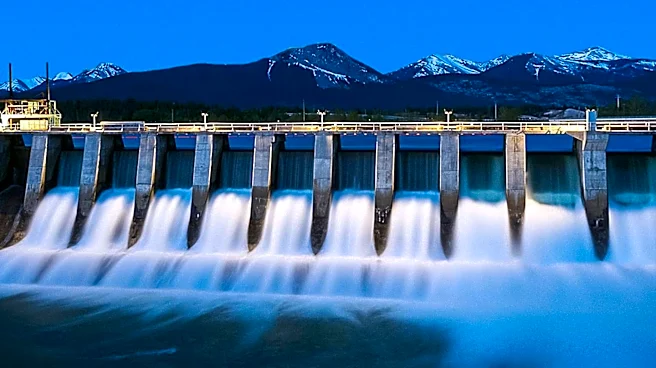
U.S. Representative Nick Langworthy, alongside Representative Kim Schrier, has introduced the Fair Licensing for Operations of Water Structures (FLOWS) Act. This bipartisan legislation aims to modernize the federal permitting process for hydropower projects
by removing unnecessary regulatory burdens and streamlining approvals for routine maintenance. The act seeks to support the next generation of American water energy technologies by exempting routine maintenance and non-substantial alterations at existing hydropower facilities from requiring prior approval from the Federal Energy Regulatory Commission (FERC). The legislation also preserves existing environmental protections and FERC's dam safety oversight. The FLOWS Act is designed to reduce regulatory delays and costs, improve grid reliability, and support innovation in domestic energy production.
Why It's Important?
The introduction of the FLOWS Act is significant as it addresses the outdated federal regulations that often hinder the efficiency of hydropower operations. By streamlining the permitting process, the legislation aims to lower energy costs and improve the reliability of one of America's oldest sources of renewable electricity. This is particularly crucial at a time when energy costs are rising, impacting consumers and businesses alike. The act also supports emerging clean energy technologies, which are vital for reducing greenhouse gas emissions and advancing the country's energy independence. The bipartisan nature of the legislation underscores the importance of hydropower in the national energy portfolio and the need for regulatory reform to keep pace with technological advancements.
What's Next?
The FLOWS Act has already seen progress with its Senate companion legislation, introduced by Senators Lisa Murkowski and Angus King, advancing through the Senate Energy and Natural Resources Committee. The next steps involve further legislative scrutiny and potential amendments before it can be enacted. Stakeholders in the energy sector, including hydropower operators and environmental groups, are likely to engage in discussions to ensure the act balances efficiency with environmental protection. The outcome of these legislative processes will determine the future landscape of hydropower regulation and its role in the U.S. energy strategy.