






What's Happening?
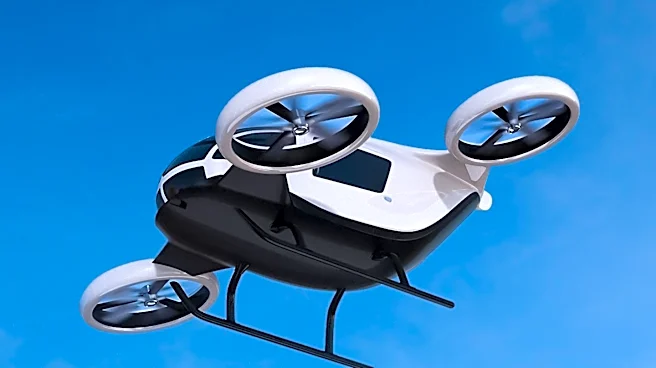
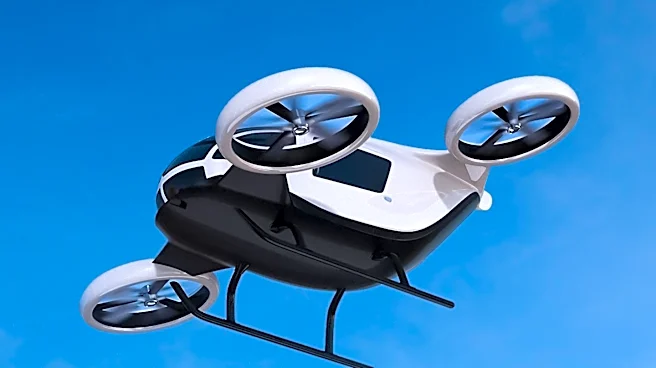
Joby Aviation has initiated a week-long series of piloted electric air taxi demonstration flights across Florida. The company's eVTOL aircraft is operating in Tampa, Orlando, and along the Space Coast, including flights at Orlando International Airport
and the Kennedy Space Center. These demonstrations are part of the White House-backed eIPP program, introduced by the U.S. Department of Transportation in March 2026, which aims to accelerate the safe integration of electric air taxi services into U.S. airspace. A significant flight occurred from downtown St. Petersburg to Tampa International Airport, retracing the historic route of the world's first scheduled commercial airline service in 1914. This campaign supports the initial development of Florida’s planned Aerial Highway Network, with public celebrations marking these milestones.
Why It's Important?
This initiative is crucial for the advancement of Advanced Air Mobility (AAM) in the United States, positioning Florida as a leading hub for next-generation aviation. The demonstrations provide valuable operational data for the FAA and state authorities, helping to evaluate airport integration, acoustic performance, and vertiport procedures. This data is essential for establishing safety standards and paving the way for commercial electric air taxi operations. The Florida Department of Transportation (FDOT) has been actively laying the groundwork for AAM since 2021, including authorizing funding for vertiport infrastructure and developing SunTrax Air, a dedicated AAM testing campus. These efforts aim to create the necessary infrastructure and policies to safely integrate AAM into the transportation system, potentially transforming how people travel across the state and beyond.
What's Next?
Joby Aviation will continue its demonstration flights throughout the week in the planned hubs of Florida’s Aerial Highway Network. These flights will generate crucial data for the FAA and state authorities as Joby advances through the final stages of FAA type certification. The insights gained from these demonstrations will be instrumental in developing safety standards and operational procedures for future commercial electric air taxi services. Florida's ongoing initiatives, such as the development of SunTrax Air and the funding of vertiport infrastructure, indicate a sustained commitment to integrating AAM. The company's existing footprint in Florida through its subsidiary, Blade, also suggests a strategic approach to building a customer base and operational expertise for future commercial rollout.
Beyond the Headlines
The re-enactment of the 1914 commercial flight route highlights a symbolic passing of the torch from traditional aviation to electric air mobility, underscoring Florida's historical role in aviation innovation. This development could trigger long-term shifts in urban planning and transportation infrastructure, necessitating new regulations and public acceptance of eVTOL aircraft. The eIPP program's emphasis on public and private stakeholder collaboration suggests a model for future technological integrations, balancing innovation with safety and regulatory oversight. The potential for quiet, all-electric aircraft to connect communities faster and more efficiently could redefine regional travel, impacting economic development, tourism, and daily commutes, while also raising questions about equitable access and environmental impact.