



What's Happening?
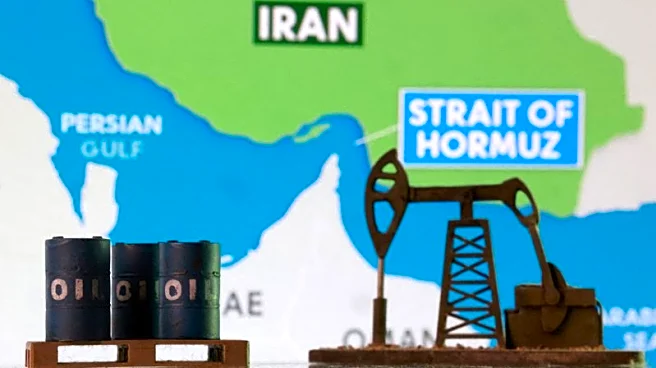
Iran has reportedly closed the Strait of Hormuz amid escalating conflict involving the United States and Israel, leading to a significant rise in oil prices and a downturn in Asian markets. Brent crude futures increased by 2% to $79.70 a barrel, while
U.S. benchmark West Texas Intermediate crude rose by 1.5% to $72.30 a barrel. The closure of the strait, a critical chokepoint for global energy supplies, has heightened fears of supply disruptions. Japan and South Korea, heavily reliant on oil shipments through the strait, are particularly vulnerable to these disruptions. The Nikkei 225 in Japan fell by 2.3%, and South Korea's Kospi index plunged by 4.9%, with significant losses in major tech stocks like Samsung Electronics and SK Hynix.
Why It's Important?
The closure of the Strait of Hormuz, through which nearly a third of global seaborne oil exports pass, poses a significant threat to global energy supplies. Countries like Japan and South Korea, which depend heavily on oil imports through this route, face potential energy shortages and economic disruptions. The rise in oil prices could lead to increased costs for industries and consumers worldwide, potentially impacting economic growth. The situation also underscores the geopolitical tensions in the Middle East, which could have broader implications for international relations and global markets.
What's Next?
If the closure of the Strait of Hormuz persists, it could lead to prolonged disruptions in oil supply, prompting countries to seek alternative energy sources or routes. This situation may also lead to increased diplomatic efforts to de-escalate tensions in the region. Additionally, global markets may continue to experience volatility as investors react to developments in the Middle East conflict.