










What's Happening?
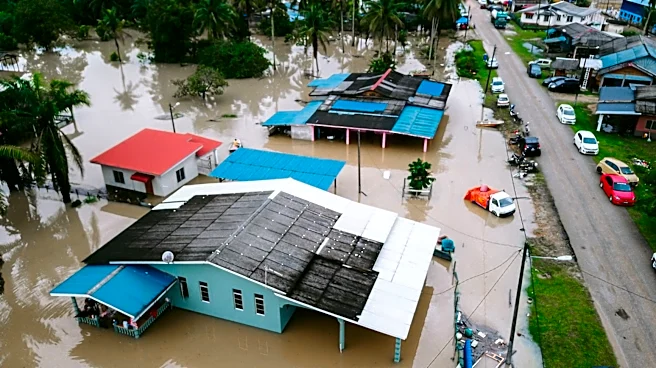
A recent study published in Nature Climate Change reveals that climate change is significantly increasing the frequency of extreme coastal floods. The research, led by Sönke Dangendorf from Tulane University, indicates that human-induced greenhouse gas
emissions, primarily from burning fossil fuels, are the main contributors to rising sea levels. This rise in sea levels, combined with natural climate patterns, is making once-rare coastal floods more common. The study analyzed long-term tide gauge records and climate models, showing that floods with a 1% annual chance of occurring are now 12 times more likely. The findings underscore the need for enhanced coastal infrastructure planning as the threat of flooding grows.
Why It's Important?
The study's findings have significant implications for coastal communities and infrastructure planning. As sea levels rise, the risk of flooding increases, threatening millions of people living in low-lying areas and causing billions in damages. The research highlights the urgent need for communities to prepare for these changes by investing in flood defenses and sustainable urban planning. Additionally, the study emphasizes the role of human activity in climate change, suggesting that reducing greenhouse gas emissions could mitigate some of the impacts. This underscores the importance of transitioning to renewable energy sources to curb emissions and protect vulnerable coastal regions.
What's Next?
Communities and policymakers are urged to take proactive measures to address the growing threat of coastal flooding. This includes investing in infrastructure that can withstand higher sea levels and more frequent floods. The study also suggests that reducing emissions could help slow the rate of sea level rise, providing a window of opportunity to implement adaptive strategies. As the world continues to grapple with climate change, the findings serve as a call to action for governments and industries to prioritize sustainable practices and reduce reliance on fossil fuels.