



What's Happening?
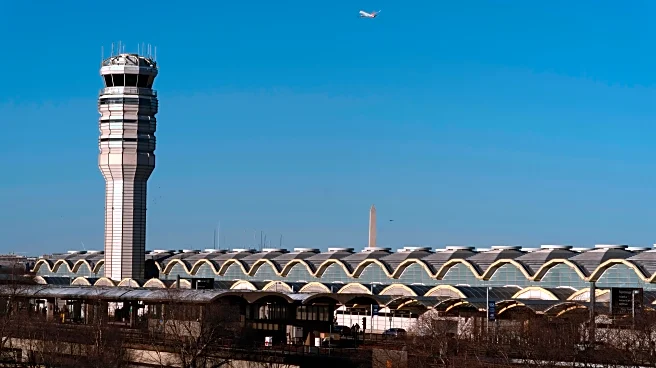
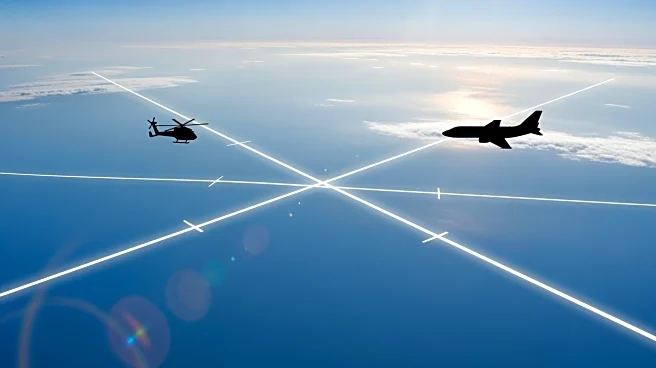
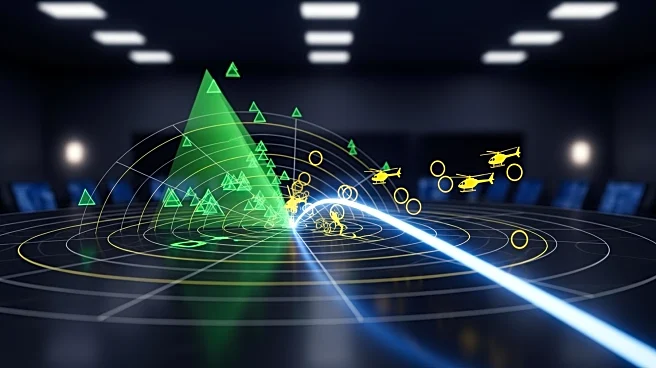
The Federal Aviation Administration (FAA) has mandated the use of radar to ensure safe distances between helicopters and airplanes at over 150 of the nation's busiest airports. This decision follows a fatal midair collision near Washington, D.C., last
year, which highlighted the inadequacy of relying solely on visual checks by pilots. The new guidelines require air traffic controllers to maintain specific lateral or vertical separations using radar technology. This measure extends a restriction already in place at Ronald Reagan Washington National Airport. The FAA's action comes after several near-miss incidents, including one involving a police helicopter and an American Airlines flight in San Antonio, Texas, and another at Hollywood Burbank Airport in California. The January 2025 collision involved an American Airlines jet and an Army Black Hawk helicopter, resulting in 67 fatalities, marking it as the deadliest plane crash on U.S. soil since 2001.
Why It's Important?
The FAA's decision to implement radar separation is a significant step towards enhancing aviation safety, particularly in busy airspace regions. By reducing reliance on visual separation, the FAA aims to prevent future accidents and near-misses, thereby protecting passengers and crew. This move is crucial for maintaining public confidence in air travel safety, especially after the tragic collision that claimed the lives of many, including young figure skaters and their families. The new guidelines are expected to mitigate risks associated with air traffic congestion and improve operational safety at major airports across the country. This proactive approach by the FAA underscores the importance of adapting safety protocols in response to evolving aviation challenges.
What's Next?
The implementation of radar separation guidelines will likely lead to further evaluations of air traffic control procedures to ensure comprehensive safety measures are in place. The FAA may continue to monitor the effectiveness of these new guidelines and make adjustments as necessary. Additionally, there could be increased training for air traffic controllers and pilots to familiarize them with the updated protocols. Stakeholders, including airlines and helicopter operators, may need to collaborate closely with the FAA to ensure seamless integration of these changes into daily operations. The aviation industry will be watching closely to assess the impact of these measures on flight safety and efficiency.